In a nutshell
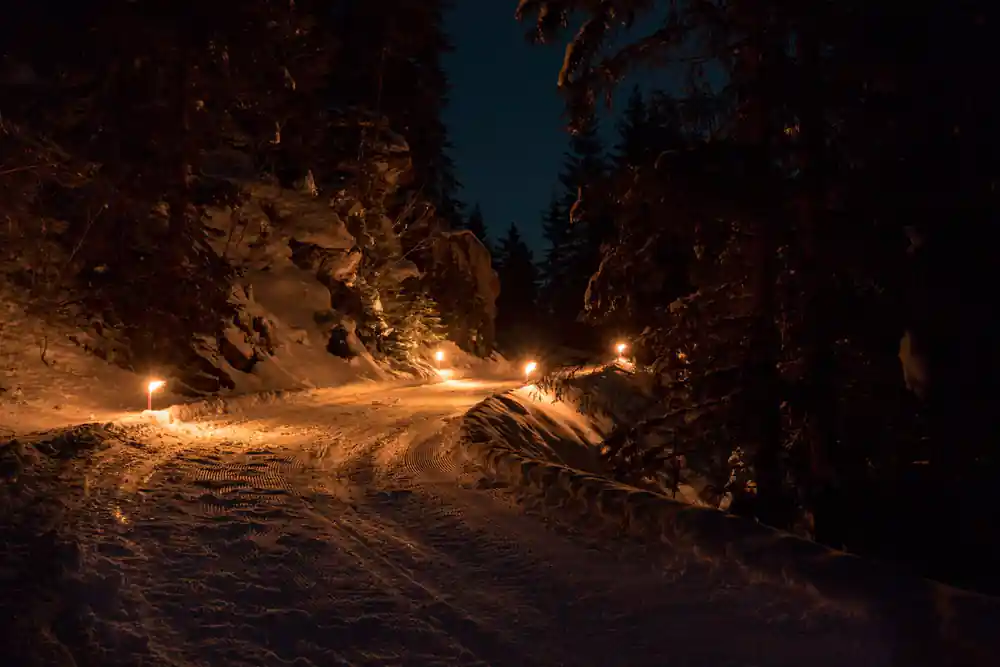
- There is no floodlighting on the run, and that is a choice rather than an omission. A lit track removes the reason for coming after dark.
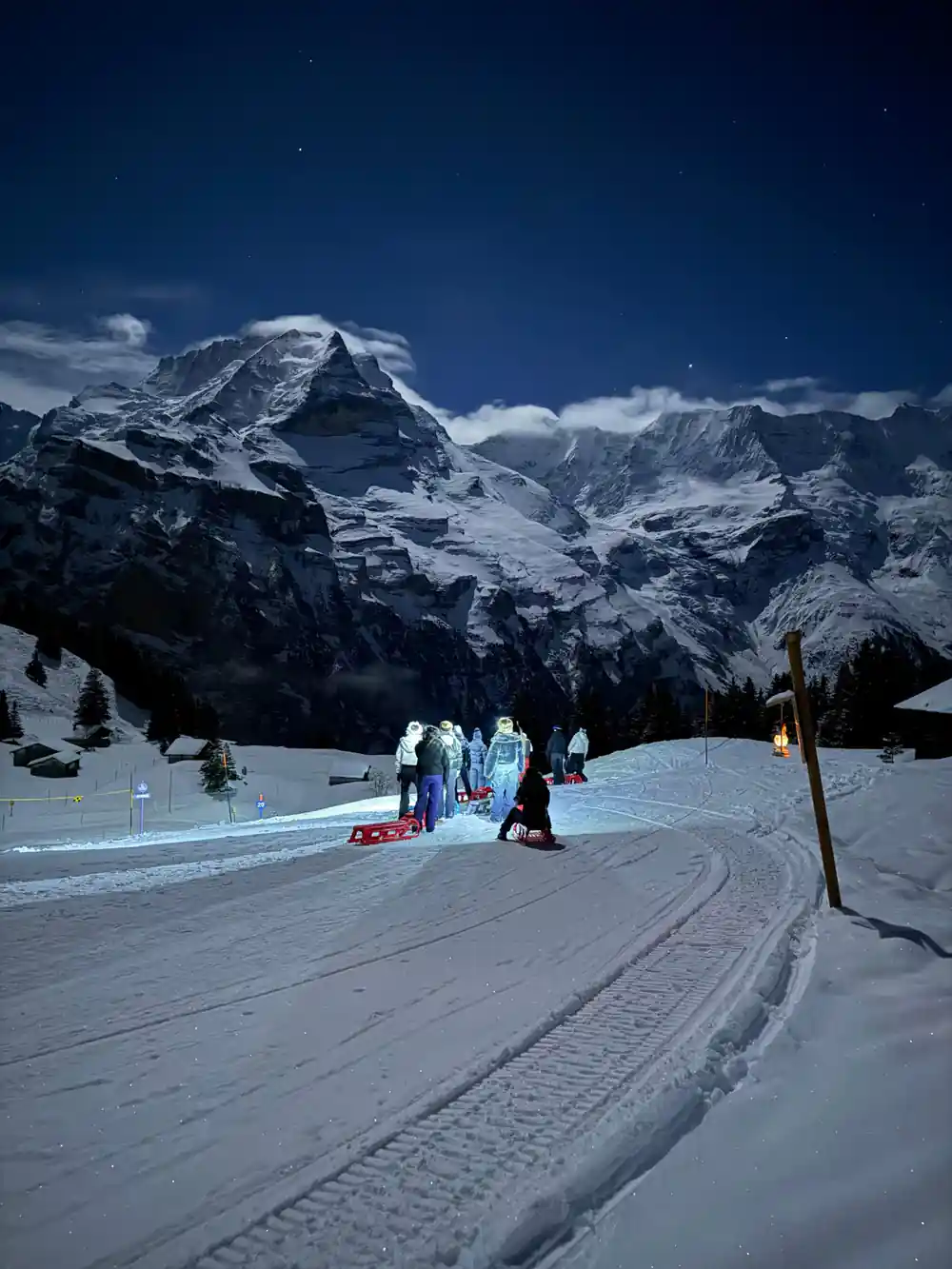
- Fresh snow returns most of the light that reaches it, so moonlight, starlight and even the glow of the valley below come back up at you.
- Give them ten minutes from the moment you leave lit surroundings and the track becomes perfectly legible. Looking at a phone screen undoes it instantly.
- The group goes down in a line behind one guide, with regular stops to regroup. The rider ahead of you is the most useful navigation aid on the mountain.
Why an unlit run is bright enough
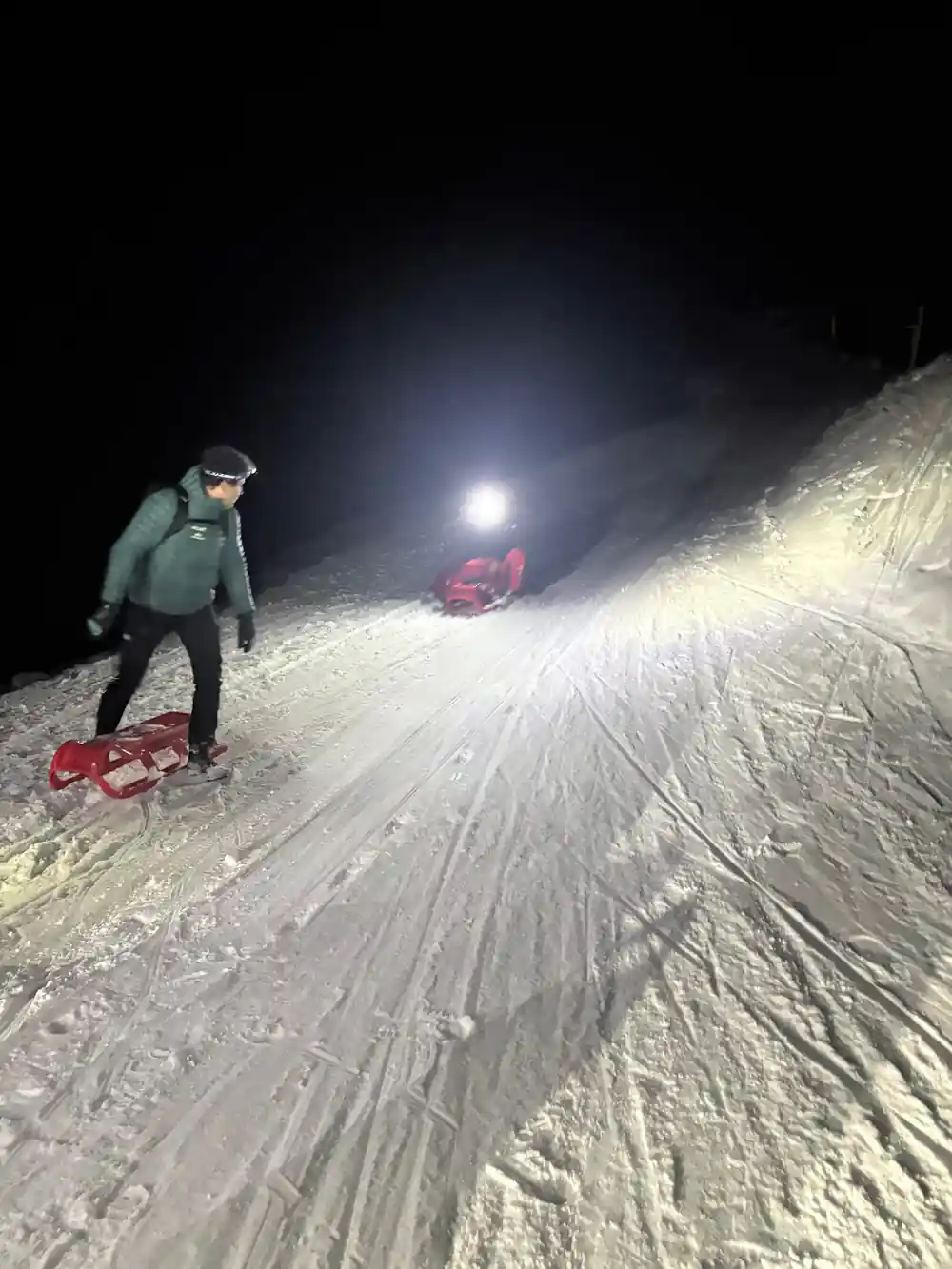
Snow is one of the most reflective natural surfaces there is. Fresh cover returns the overwhelming majority of the light that lands on it, which is why a snowy landscape at night looks nothing like a dark field. Whatever light exists, and there is always more than you think, gets thrown back up rather than absorbed into the ground.
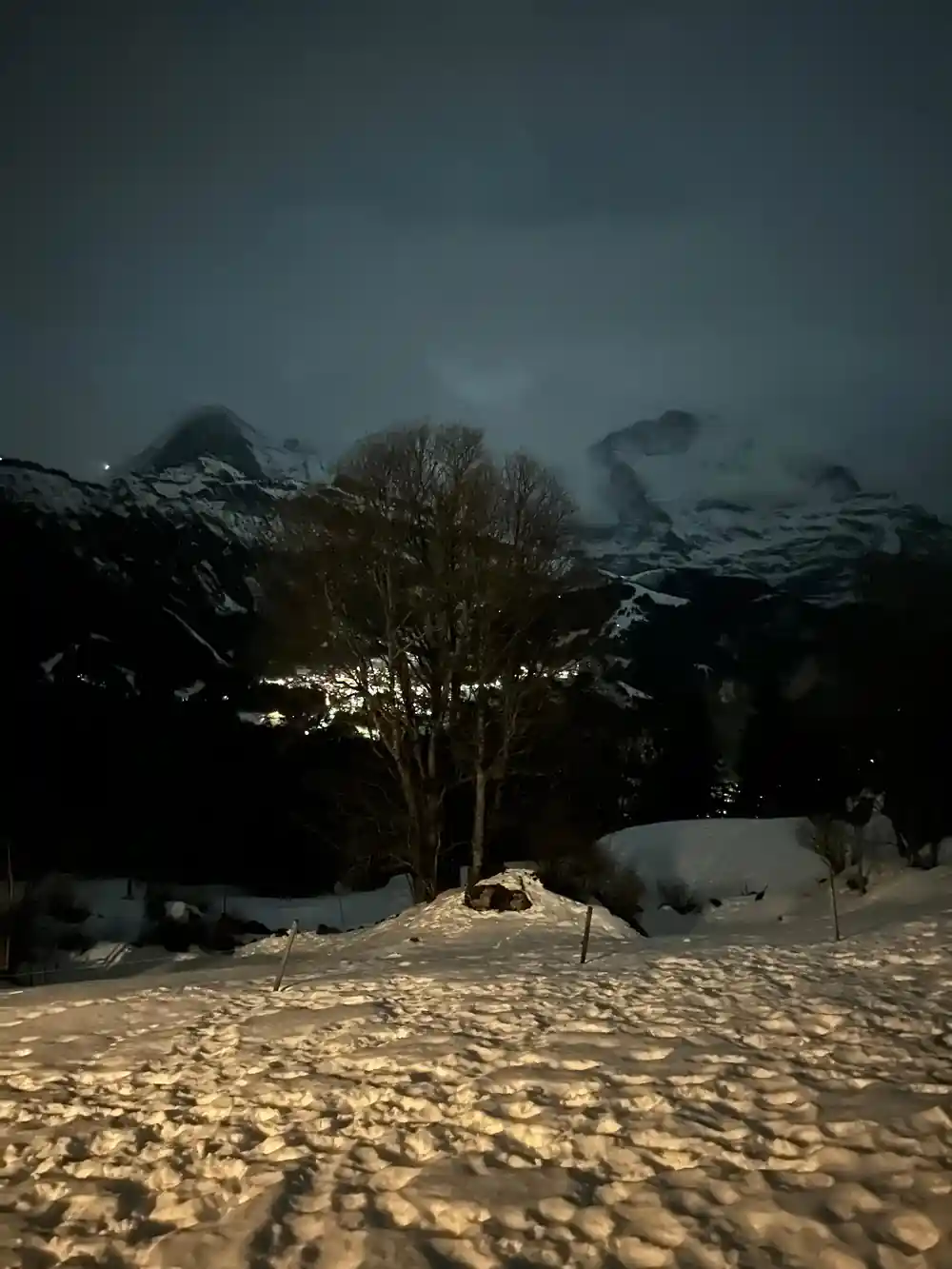
In practice that means a half moon is generous, a full moon is extravagant, and even a cloudy night is workable because cloud over snow bounces light between the two. Add the diffuse glow of a valley full of streetlights below you and the track reads clearly as a pale ribbon between darker edges.
This is the same effect that makes a snowy night in a city feel oddly luminous, scaled up to a mountainside with nothing competing. It is genuinely one of the more surprising things about the evening for anyone who has not been out in snow after dark.
How long your eyes take, and what ruins it
Dark adaptation is fast at first and then slow: most of the useful gain arrives within about ten minutes, and it keeps improving for much longer than that. The ride up in the gondola is therefore doing a job beyond transport, because by the time you arrive at the top your eyes have already started adjusting.
The thing that undoes it is a bright screen at close range. A phone held up to take a photograph resets a good part of your adaptation and it takes minutes to get back, which is a genuinely annoying trade when the group is about to set off. Take the photographs at the stops rather than in the seconds before a descent.
The same applies to head torches pointed at other people. A light in the eyes of the rider behind you is worse for them than no light at all, which is why the etiquette on a night run is to keep any beam pointed down and short.
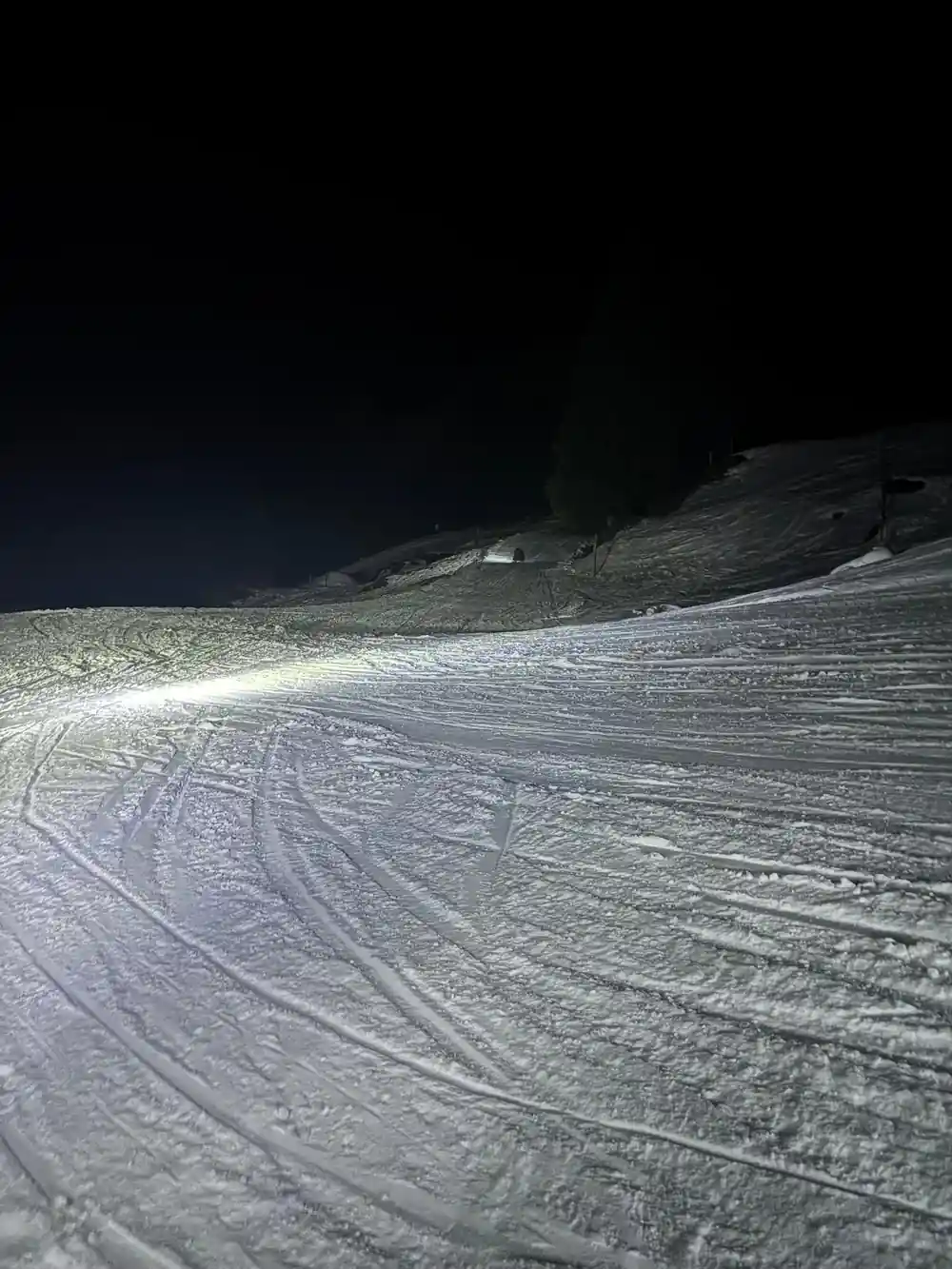
A pale track between dark edges, and the valley lights a long way below
Whether you need a headlamp
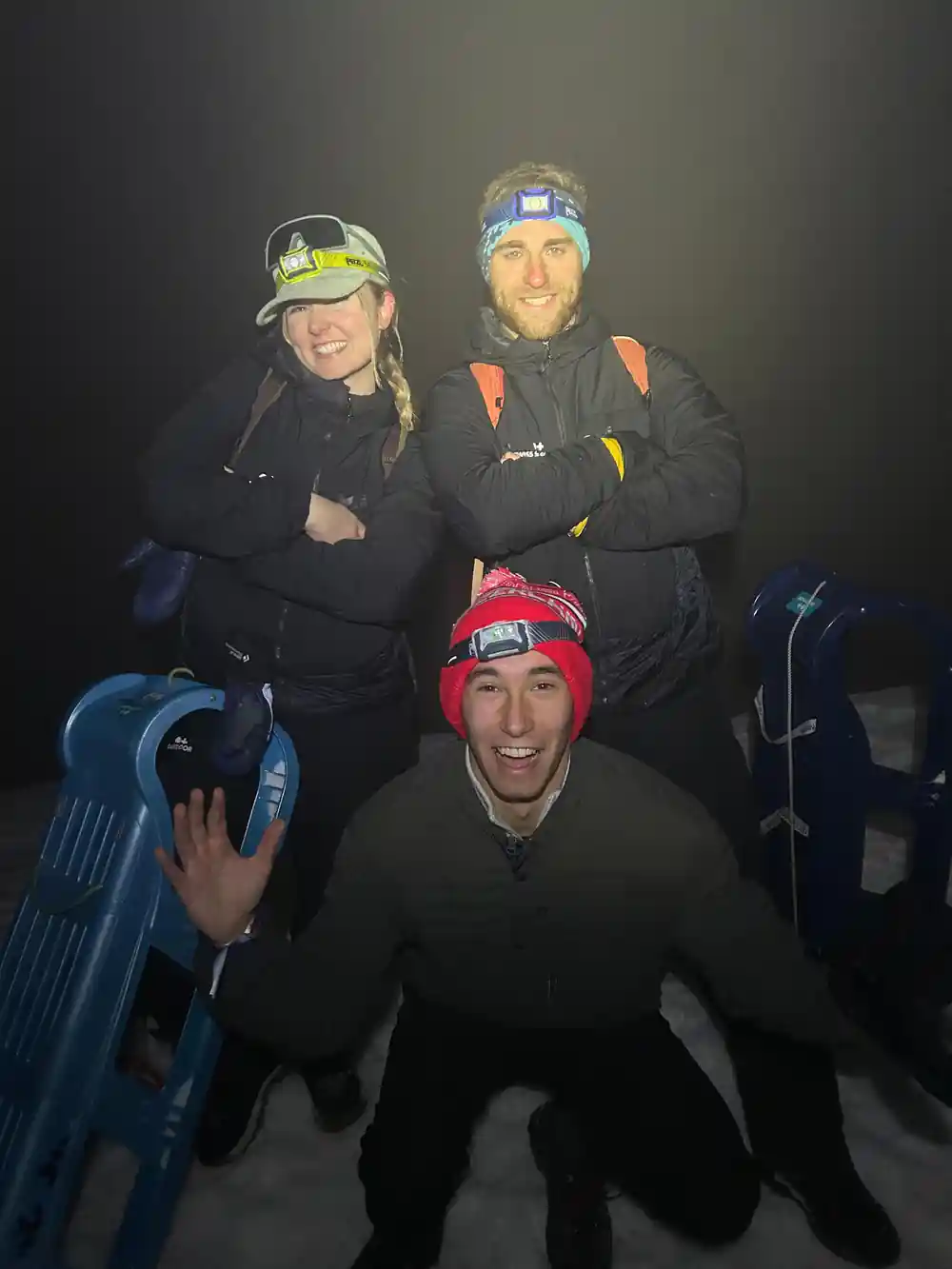
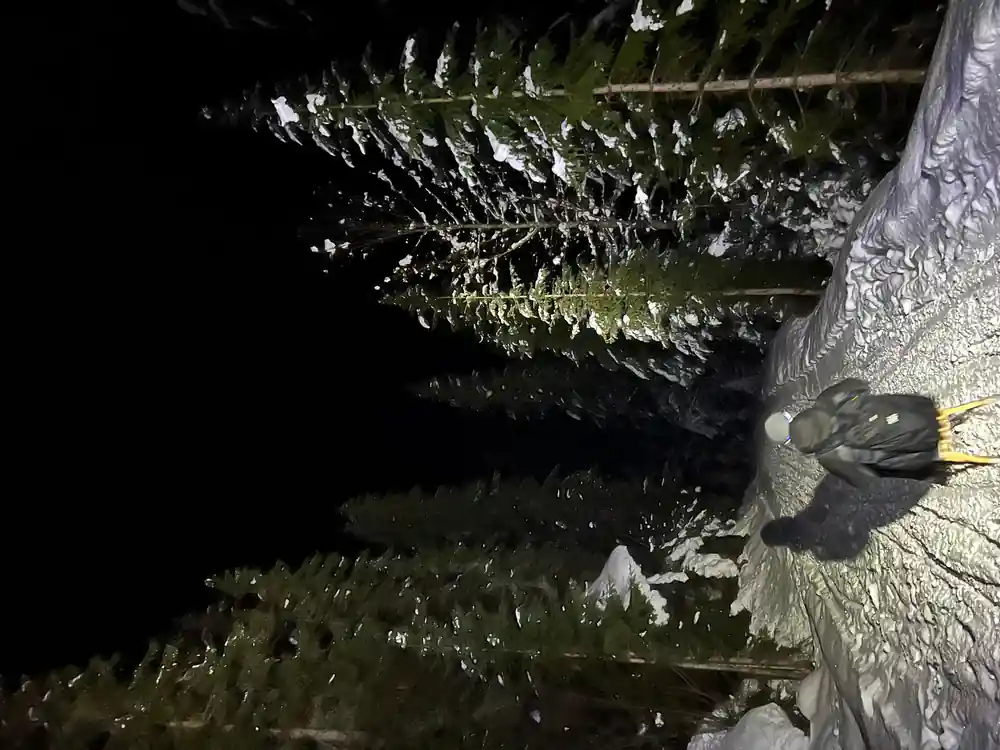
A small head torch is useful for the things that happen off the sled: finding a glove you dropped, sorting out a boot, seeing what you are doing at a stop. It is much less useful for the descent itself, where it lights a small bright circle a few metres ahead and makes everything beyond that circle look darker than it really is.
Most people who bring one end up riding with it switched off and using it only at the stops, which is exactly the right use. The eye works better with a wide field of dim, even light than with a narrow field of bright light surrounded by black.
If you do bring one, a red mode is the courteous option, because it preserves everyone else's adaptation as well as your own. None of this is essential equipment; the tour works without it.
Following a line of people down a mountain
The group descends together with a guide in front, and this is the real navigation system. You are not route-finding: you are following the rider ahead, at whatever gap feels comfortable, on a track that has a defined line. That removes the entire category of worry about getting lost in the dark.
Gaps matter more than in daylight, because reaction time is a little longer and because a stopped sled ahead of you is harder to see. The briefing covers this and the practical answer is simply to leave more room than feels necessary and to look further ahead than feels natural.
Frequent stops are part of the design. The guide pulls up, the line closes, everybody catches up and gets their breath, and then it starts again. It gives the descent a rhythm and it means nobody is ever alone on the mountain.
10 min
About ten minutes is all it takes for your eyes to make most of their adjustment to the dark, which the gondola ride up conveniently covers.
What it feels like, honestly
Faster than the same speed in daylight. Sound is closer, because there is less to see and more to hear: runners on packed snow, the person ahead, occasionally nothing at all. The cold arrives through the front of you and the effort is in your hands and heels.
The first minute is usually apprehension, the second is usually laughter, and after that most people settle into a steady negotiation with their own nerve about how much speed to allow. It is the sort of activity where the fear and the enjoyment are the same sensation viewed from different angles.
At the stops, with the runners quiet, the other thing arrives: you are standing on a mountain at night in the snow, with the valley lit up somewhere below and the ridges black against a sky that has considerably more stars in it than the one at home.
When the weather is against you
Cloud is not the problem people expect. An overcast night over snow is dimmer than a clear one but still perfectly usable, because the cloud base bounces light back down and the snow bounces it back up. What genuinely reduces visibility is falling snow, which scatters light in front of your eyes in the same way fog does.
Wind matters more for comfort than for sight. On the fast sections you are creating your own wind regardless, and an actual breeze on top of that is what turns a cold evening into a very cold one. This is the argument for renting proper clothing rather than improvising.
The operator decides on the day, and the run itself may move for snow reasons. That flexibility is what keeps the tour running through a variable season rather than cancelling it whenever one particular track is thin.
See what a mountain looks like with the lights off
from US$123Reserve now & pay later