In a nutshell
- Under-tens cannot ride, and under-eighteens cannot come unaccompanied. Braking needs reach and strength that cannot be delegated to the guide.
- A runner sledge is rated equipment. Beyond its design weight it tracks and stops differently, which is why the limit is a number rather than a judgement.
- Pregnancy, back problems and heart problems. The descent is bumpy, impacts travel up the spine, and cold with exertion is a real cardiovascular load.
- Animals cannot come. Nothing else is asked of you: no technique, no fitness, no previous winter sports, because the lift does all the climbing.
The list, stated plainly
This tour publishes an unusually specific set of restrictions, and they are worth reading before you book rather than discovering at the meeting point. It is not suitable for children under ten years old, for pregnant women, for people with back problems, for people with heart problems, or for anyone over 125 kilograms. Pets are not allowed and unaccompanied minors are not allowed.
That is the whole list, and none of it is ambiguous. It is also longer than most tours publish, which is a good sign rather than a worrying one: an operator that has thought about who should not be on a sled at night is an operator that has thought about the activity.
Everything not on the list is permitted. There is no fitness requirement, no skill requirement and no prior experience needed, which is the point of sledding as against skiing.
Why ten, and why not younger
Braking on a sledge is done by pressing both heels hard into packed snow and holding them there while the machine is trying to carry you forward. It takes leg length, it takes strength, and it takes the judgement to do it early rather than at the last moment. Below about ten those three do not reliably arrive together.
It is also the one control that cannot be shared. A guide can lead, can set the pace and can stop the group, but cannot slow somebody else's sled. That makes braking the hard floor on age in a way that steering is not.
The separate rule that under-eighteens cannot come unaccompanied is a supervision matter rather than a physical one. A responsible adult has to be present, which is the normal arrangement for an evening activity on a mountain.
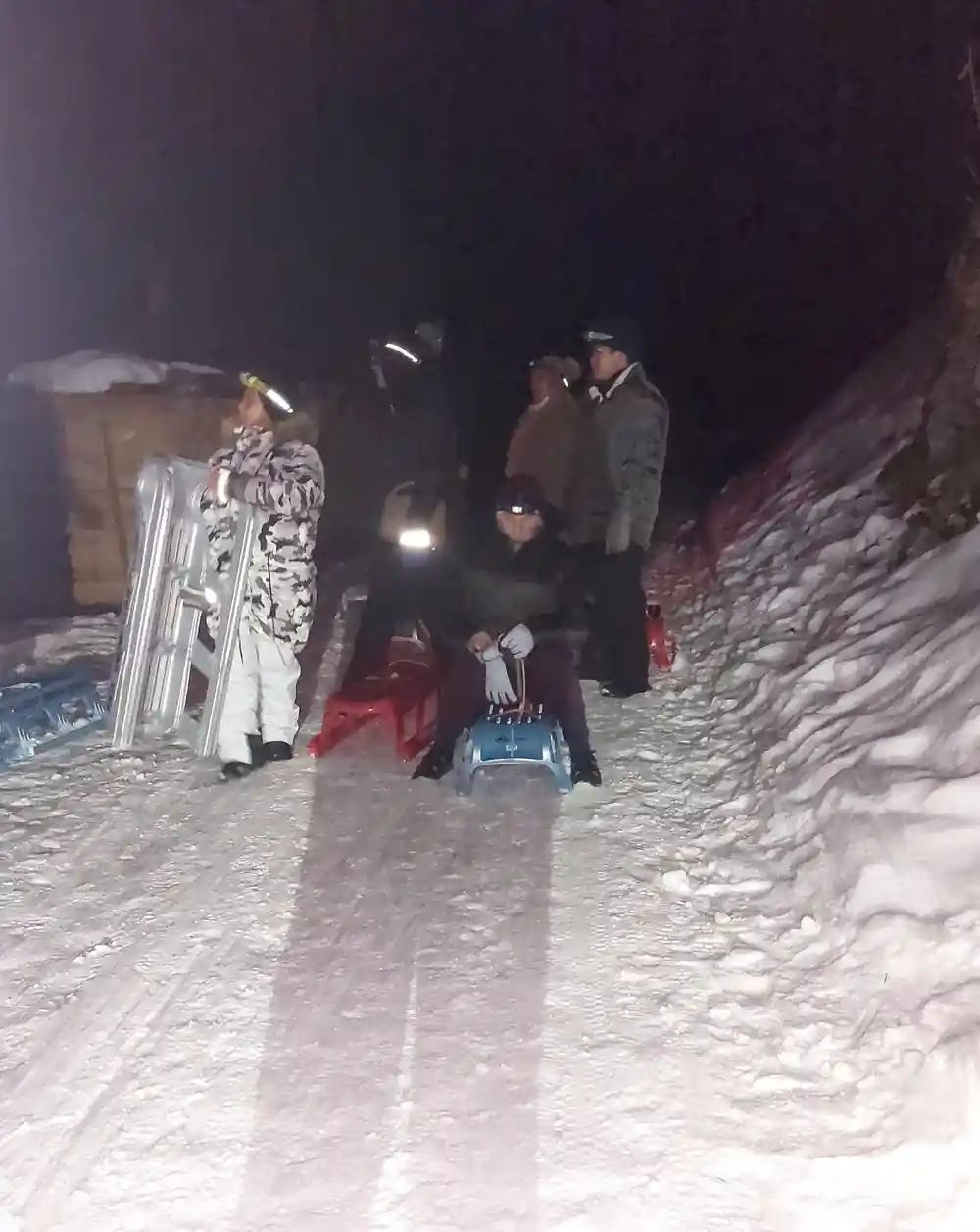
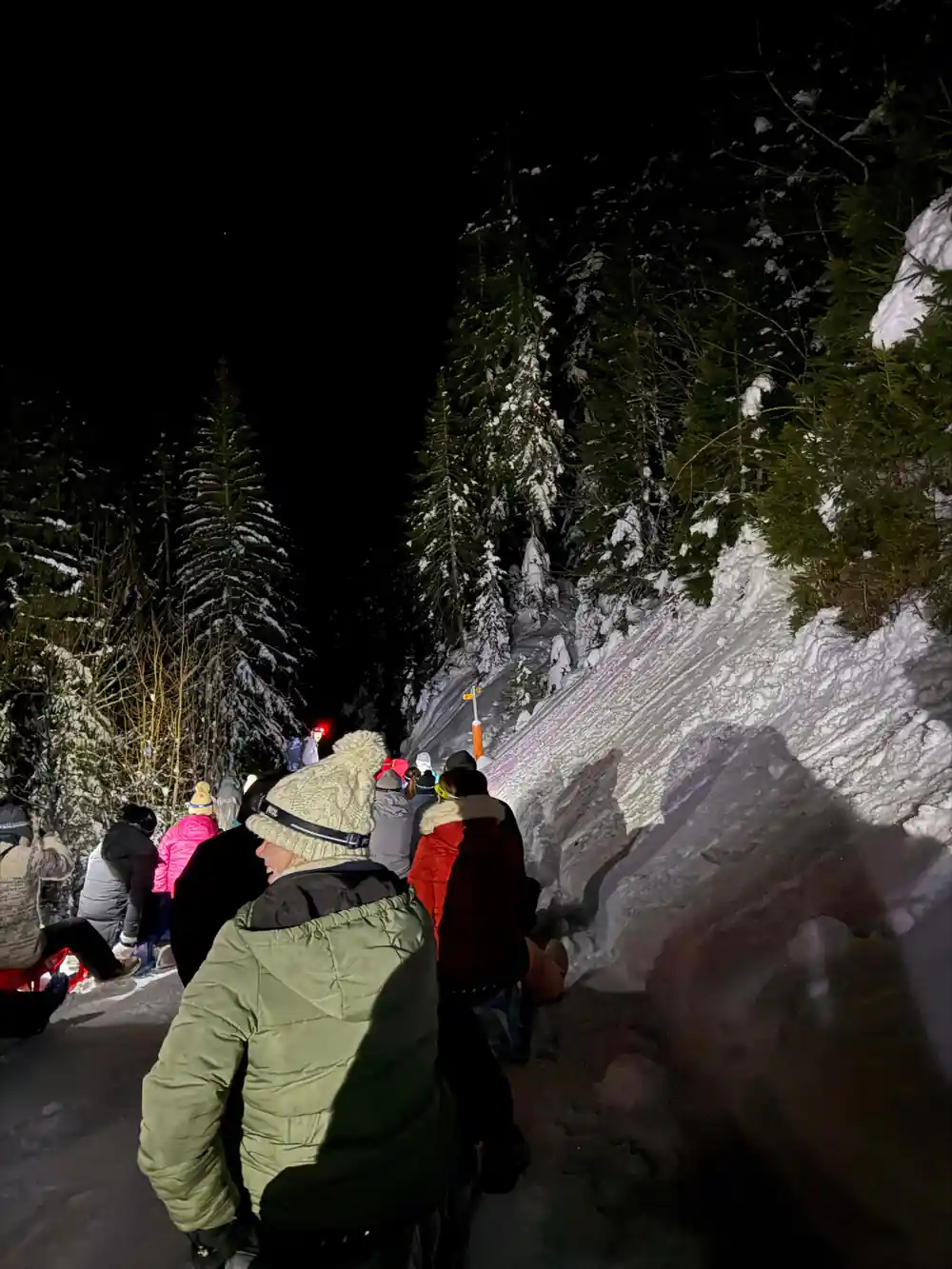
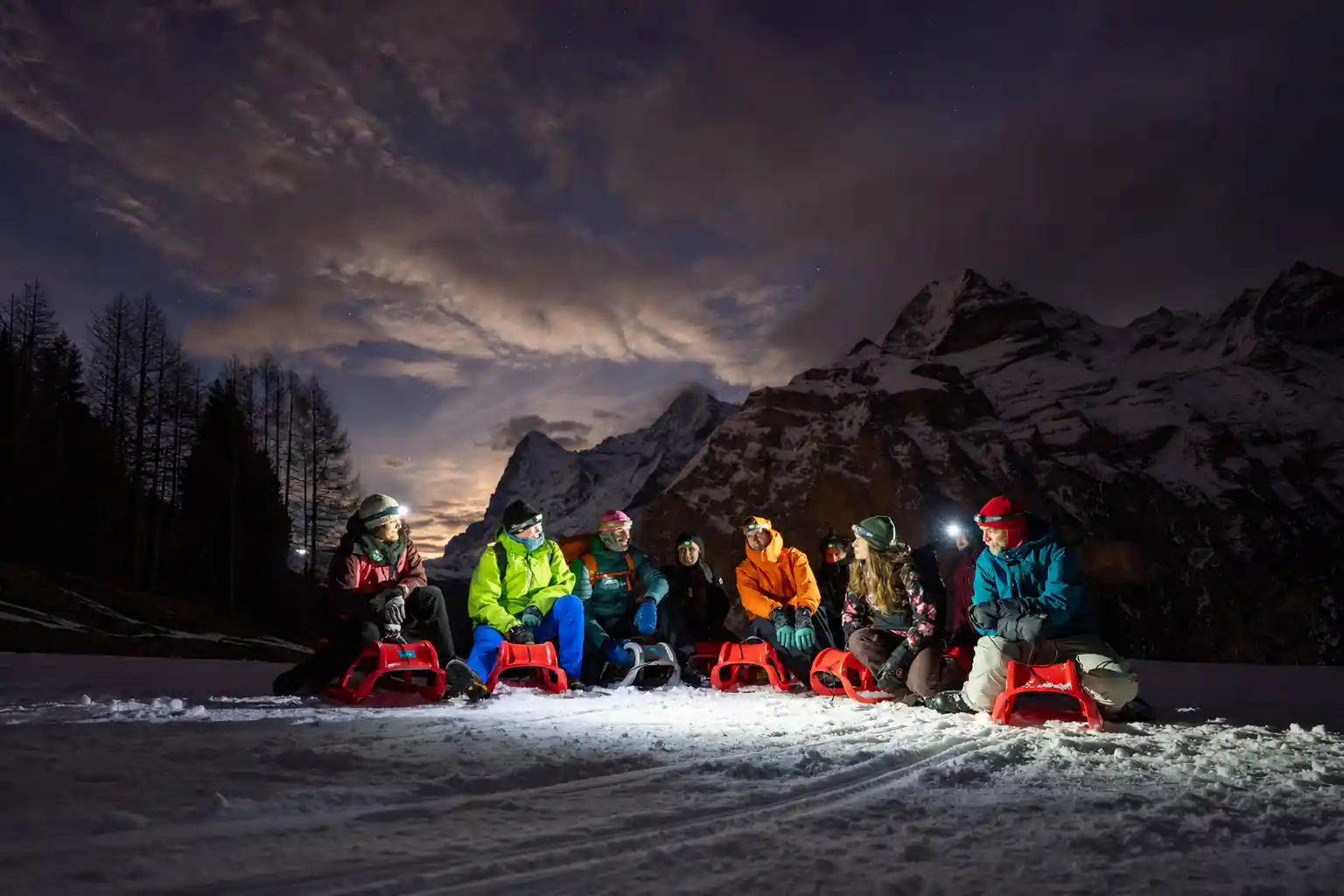
A group at the top, gear sorted, listening to the briefing before the first corner
The weight limit is about the sled
A hundred and twenty-five kilograms sounds like a judgement about the rider and is actually a specification for the equipment. A runner sledge is a rated object: the frame, the runners and the joints are designed for a load, and past that load the machine flexes differently, tracks differently and stops over a longer distance.
That matters more at night and more in a group. A sled that does not do what its rider expects is a hazard to the riders around it as much as to the person on it, and the whole safety model of the descent depends on everybody being able to stop roughly where they intend to.
It is a hard number rather than a guideline, and it applies regardless of fitness or experience, because it is the sledge's limit and not the rider's. An operator that waived it would be lending out equipment outside its rating on a dark mountain, which is not a favour to anybody.
Pregnancy, backs and hearts
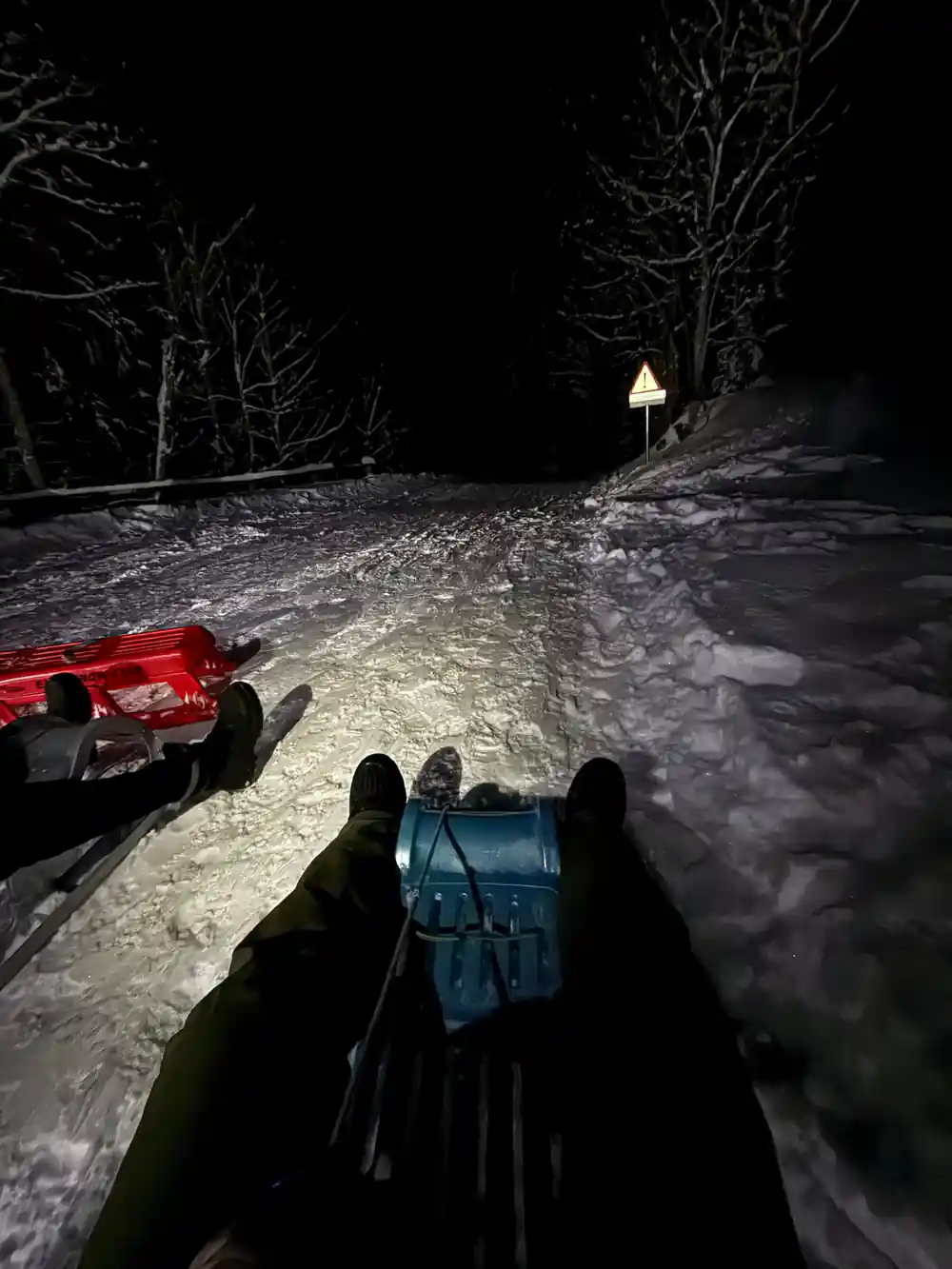
These three sit together because they describe the same physical reality from different directions. A sled run is bumpy in a way that a photograph never conveys. The surface is packed snow with ruts, ridges and compressions, you are sitting on a rigid frame with no suspension at all, and every one of those impacts travels straight up through the base of the spine.
For an existing back problem that is an obvious aggravation. For a pregnancy it is the reason the activity is excluded outright rather than left to individual judgement. Neither is a formality.
The heart exclusion is about load rather than impact. Cold air, altitude, physical exertion and a strong dose of adrenaline arrive together, at night, some distance from a road. That combination is a genuine cardiovascular stress, and the sensible place to think about it is at home rather than at the top of a mountain.
125 kg
The weight limit is a specification for the sledge, not a judgement about the rider: beyond its rated load the machine tracks and stops differently.
What is not required
No experience of sledding, skiing or any other winter sport. The technique is a lean and a heel and it is learned in the first corner, which is precisely why the activity is offered to people arriving from countries with no snow at all.
No particular fitness. You are seated for the descent, the gondola does the climbing, and the effort is in gripping and bracing rather than in anything sustained. People routinely worry about this and it is the wrong thing to worry about.
No equipment of your own, beyond clothing. The sled is provided, boots are provided if you need them, and warm clothing can be rented at the meeting point.
How to decide, and what to ask
If you are on the list, the answer is no, and it is better to know that now than at the gondola station with a group waiting. If you are close to a limit, ask the operator directly when you book: they know their own sleds and their own runs, and a clear answer beforehand is easy to get.
If you are travelling with a mixed group, the restrictions are worth circulating before anybody books rather than after. The age limit in particular catches families out, because ten is higher than the intuitive expectation for something that sounds like sledging.
And if you are simply nervous rather than restricted, that is not a reason to stay behind. Speed is entirely under your own control, the guide is in front the whole way, and the run is long enough that a cautious pace still gives you the full evening.
Check the limits, then book with nothing left to find out
from US$123Reserve now & pay later