In a nutshell
- Night sledding is a descent of a prepared alpine sledging track after dark, on a proper runner sled, led by a guide. It is a mountain descent, not a hill in a park.
- An alpine run is measured in kilometres and minutes rather than in seconds. You go up by lift and come down a track built for the purpose.
- Lean to turn, heels down to slow. It takes about one corner to learn and then you spend the run deciding how fast you want to travel.
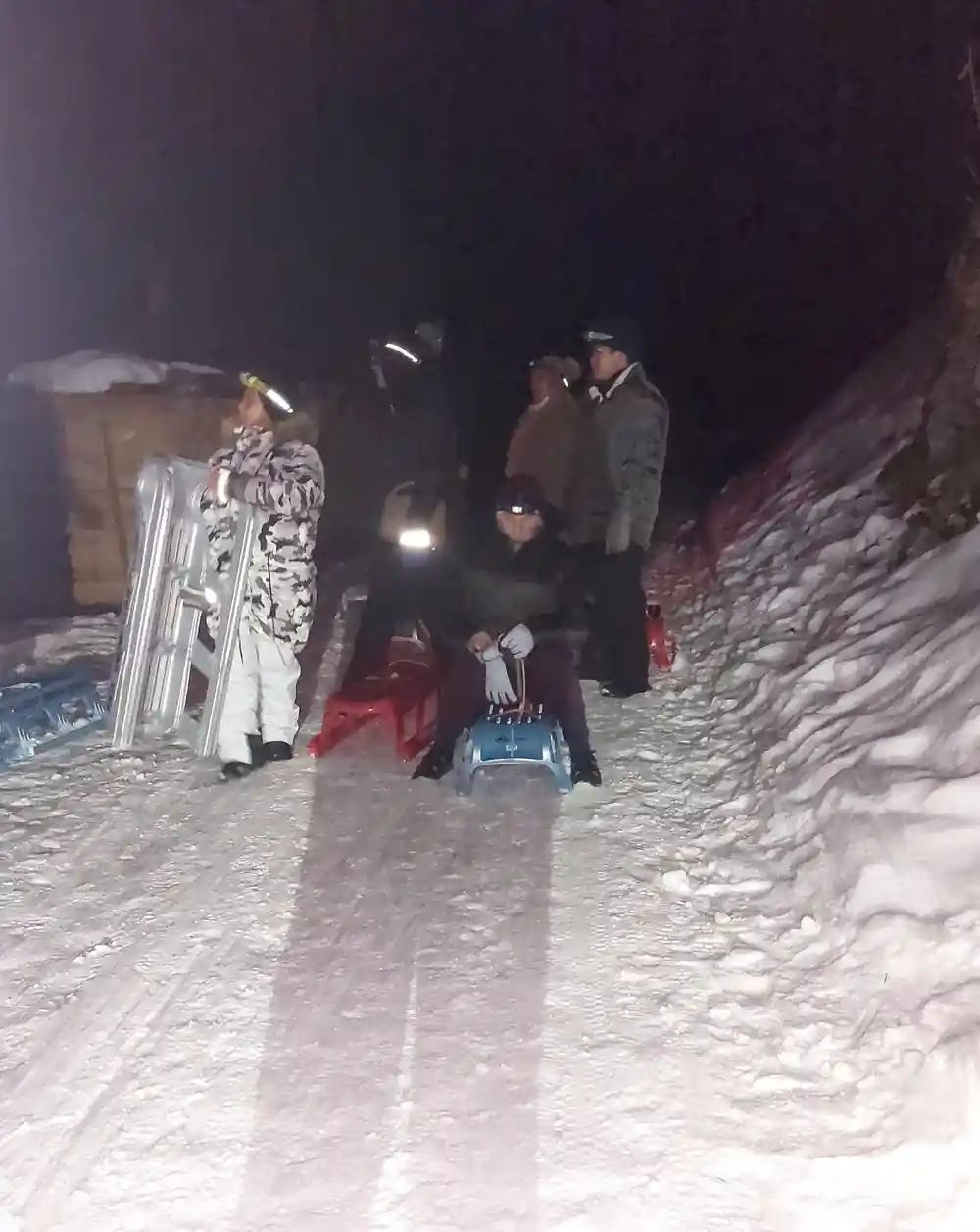
- No floodlights, snow reflecting whatever moon and starlight there is, and a line of people following a guide. The same run in daylight is a different activity.
The equipment, and why it is not a plastic tray
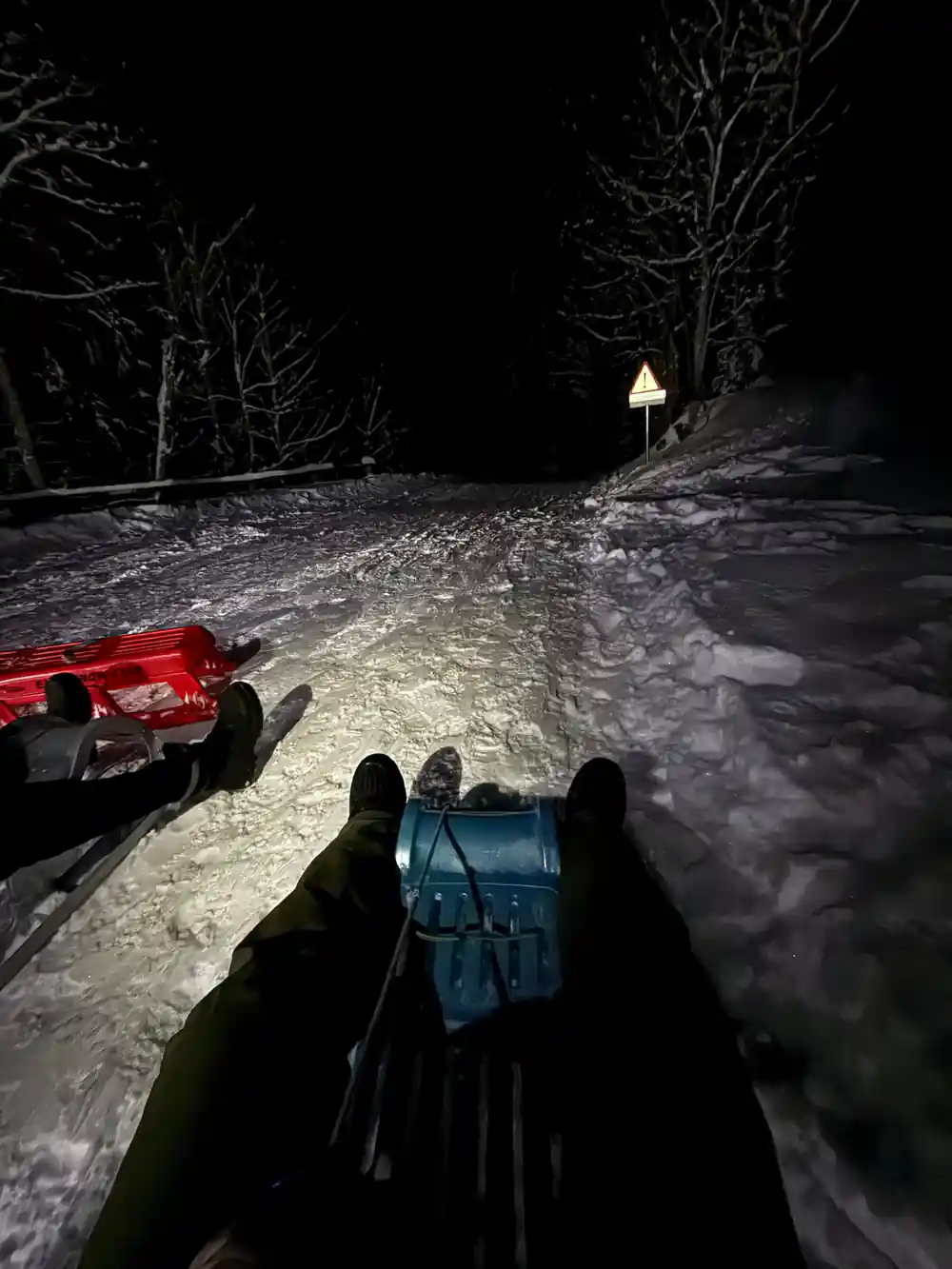
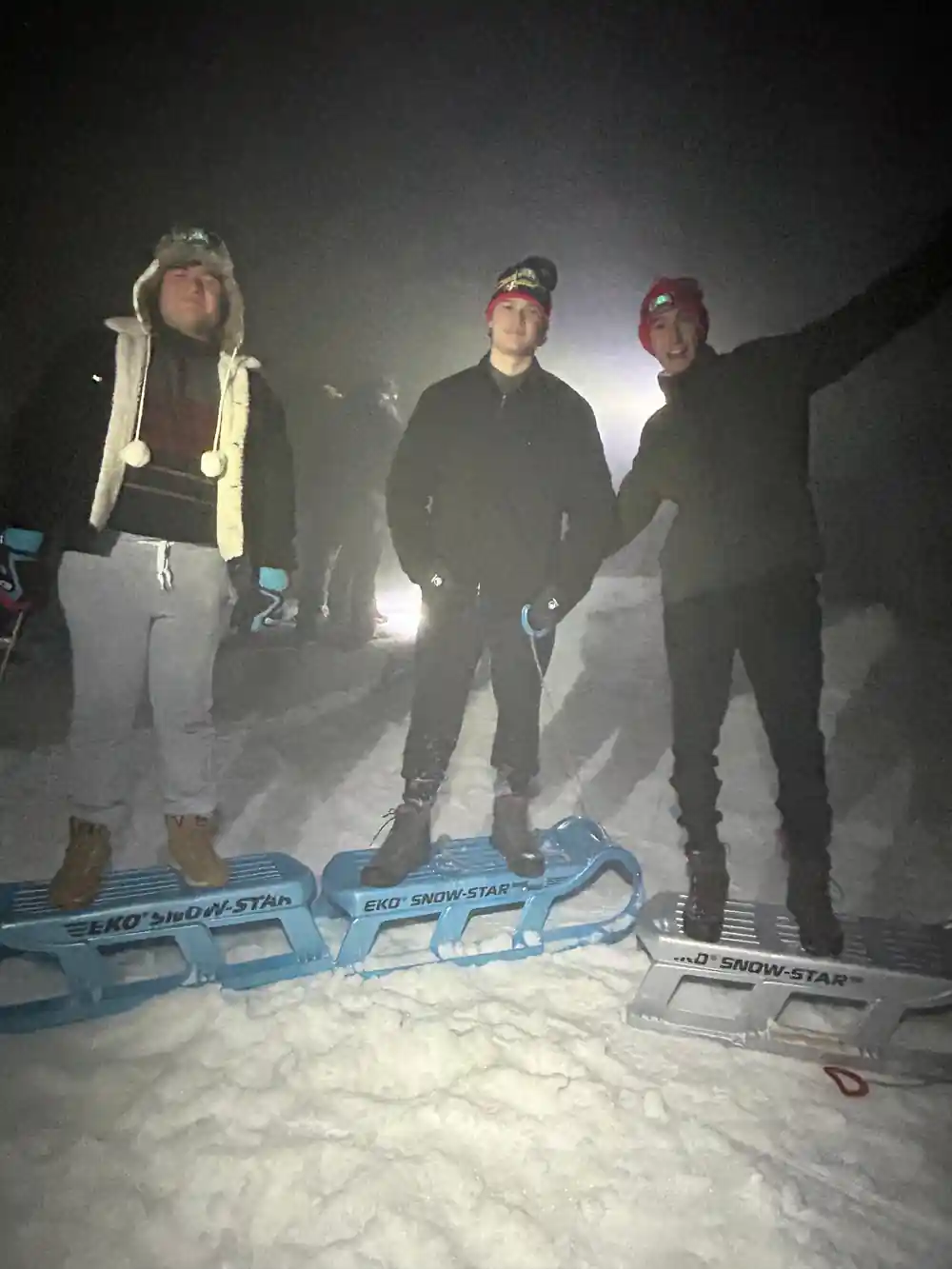
An alpine sledge is a frame on two runners, traditionally wood with steel shoes, sometimes metal, with a slatted seat and a bar or rope at the front. You sit on it rather than in it, feet forward, and your weight sits high enough that leaning genuinely moves the machine. It is a piece of transport with a long history in the Alps, not a toy borrowed for the afternoon.
The runners are the whole design. They cut into packed snow just enough to hold a line, which is what lets you steer at speed rather than simply sliding wherever the camber sends you. On a groomed track that gives you a surprising amount of control; on soft snow it gives you considerably less, which is one reason the runs are prepared.
The sled is provided on this tour, which is worth stating because a good one is a specific object and the hire shop version of it is exactly what you want. Hiking boots are provided too if you need them, and they matter more than people expect, because your heels are the brakes.
How you steer and how you stop
Steering is done by leaning your body and by pressing a heel into the snow on the side you want to turn towards, which pivots the sled around that point. Some people also pull on the front of the frame to help it round; on a well prepared track the lean does most of the work and the heel does the rest.
Braking is both heels pushed down hard, and it takes more commitment than instinct suggests. The usual mistake is a timid dab that does nothing, followed by a panicky one that works. After a corner or two the calibration arrives and you stop thinking about it.
There is no seatbelt and nothing to hold you on, which sounds alarming and is actually the safety mechanism: if things go wrong you simply come off, at which point the sled stops being your problem. This is why the briefing spends its time on how to fall rather than on how not to.
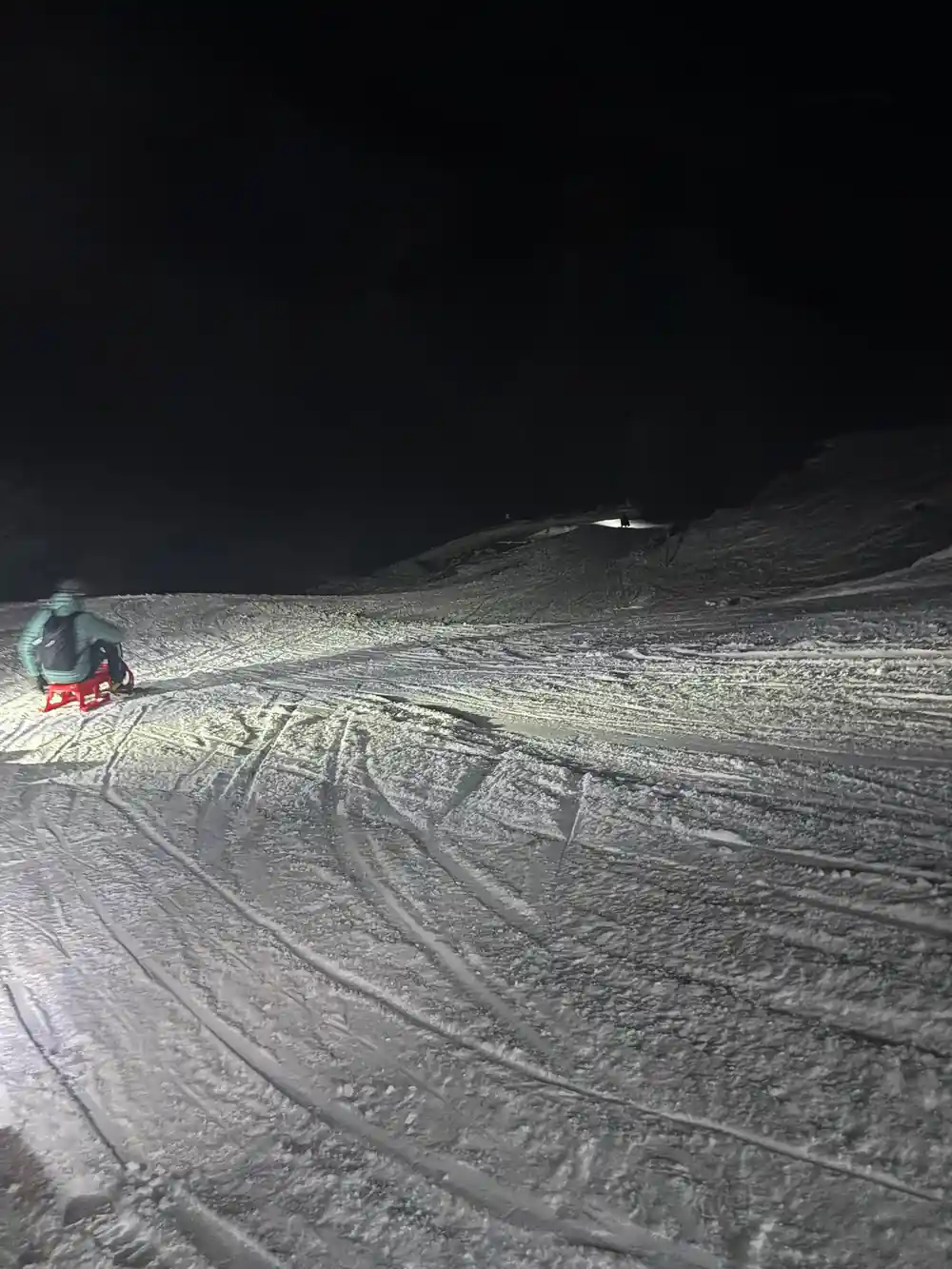
A runner sled on packed snow: a frame, two steel-shod rails and a slatted seat
How long a run actually is
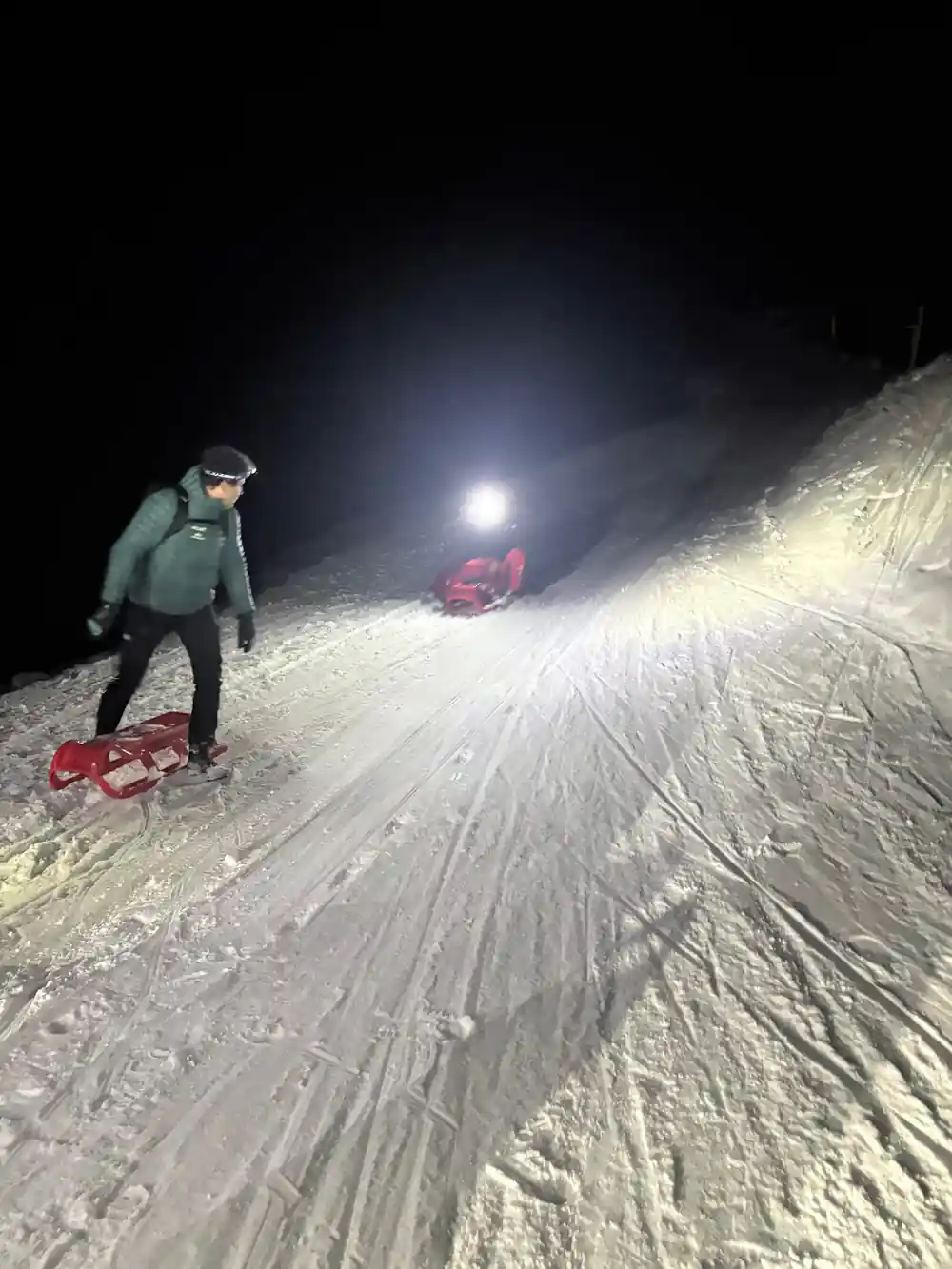
The gap between a sledding hill at home and an alpine sledging track is a matter of scale rather than degree. A prepared run in the Alps is a route down a mountain, often a summer path or forestry road groomed for winter use, and it is measured in kilometres. A descent takes long enough that you stop counting and start settling into it.
That length is why the guide stops the group along the way. Regrouping keeps everybody together on a track where speeds vary a great deal between confident riders and careful ones, and the pauses give you time to look at where you are, which on a clear night is the point.
It is also why the ascent is done by lift. Walking up a run of this length in winter would be an expedition, which is exactly what the included gondola ticket exists to avoid.
What the darkness changes
Everything about the activity is the same and everything about the experience is different. The mechanics of a sled do not care what time it is. What changes is that your visual field shrinks to the track and its immediate surroundings, that speed feels considerably greater than the same speed in daylight, and that the landscape stops being scenery and becomes a shape.
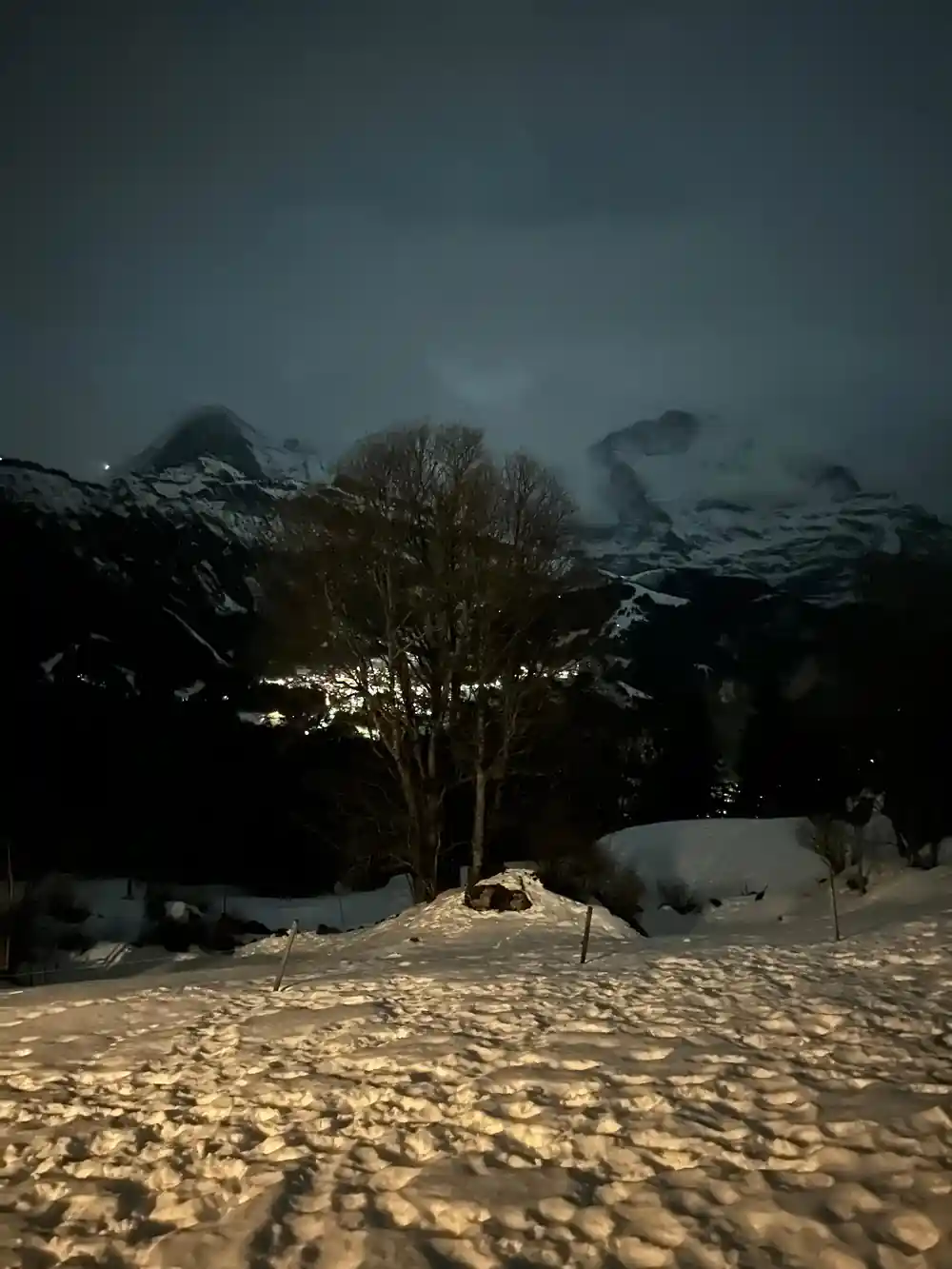
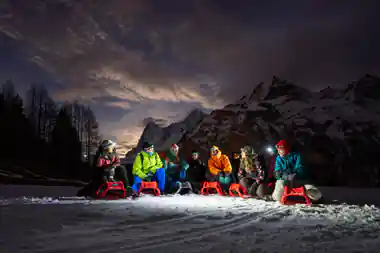
The absence of floodlighting is deliberate. A lit run turns the mountain into a corridor and removes the reason for coming after dark. Unlit, on snow, under any kind of moon, you can see the track perfectly well and you can also see the valley below and the ridges opposite, which is not something a daytime run offers in the same way.
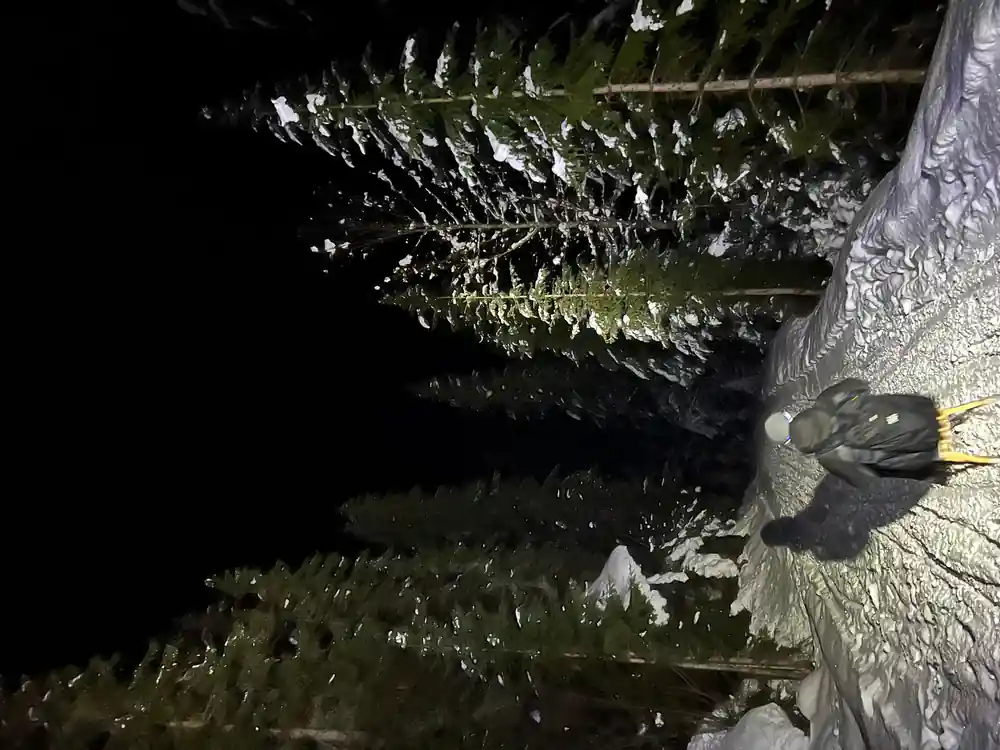
The other change is social. A group moving down a mountain in the dark behind one guide behaves differently from a group scattered across a hill in the afternoon. It is quieter, more deliberate, and considerably more memorable.
2 runners
Two steel-shod runners are the whole design. They bite into packed snow just enough to hold a line, which is what lets you steer instead of sliding.
Groomed track against open snow
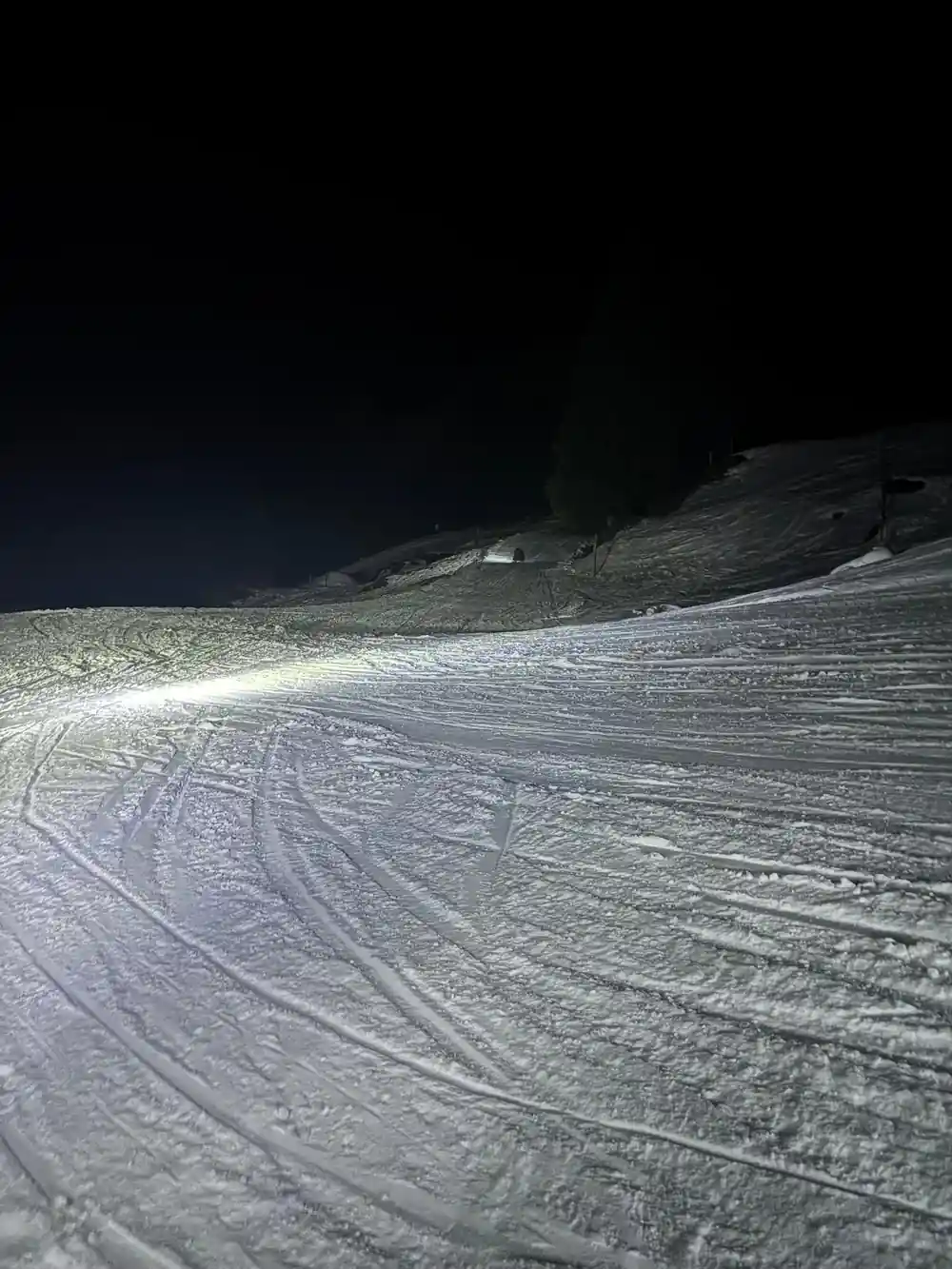
This is a prepared run rather than a wild descent. That distinction matters for what it is like: a groomed track has a defined line, banked corners in places, a predictable surface and a known route, and it is why sledding can be offered to people with no experience at all.
Off a prepared track, a sledge is much harder work and much less predictable, because the runners cannot bite consistently in soft or crusted snow. Anybody imagining a free descent across open mountainside is imagining a different and considerably more difficult activity.
What the track gives up in wildness it returns in the ability to go quickly. On a good surface a sled carries real speed, and the fastest sections of a prepared run are the ones people talk about afterwards.
Where it sits among winter activities
Skiing and snowboarding are skill sports with a learning curve measured in days. Sledding is not: the technique is shallow enough to acquire in a minute, so the whole of the experience is available on a first attempt. That makes it unusually good for mixed groups where not everybody skis.
It is also easier on the body than it looks. You are sitting down, the lift does the climbing, and the effort is in gripping, steering and staying warm rather than in anything sustained. The restrictions that do exist are about impact and vibration rather than about fitness.
The nearest comparison is probably a fairground ride you steer yourself, repeated for the length of a mountain, in the dark, outdoors. That is a strange sentence and it is also an accurate one.
Three hours, a sled, a guide and no floodlights
from US$123Reserve now & pay later