In a nutshell
- The sled, hiking boots if you need them, transport from Interlaken, the gondola ticket up and a guide who rides the run with the group.
- Warm winter clothing, which can be rented at the meeting point, along with food, drinks and tips. The clothing is the one that decides your evening.
- Reviewers are consistent: the people who hired ski trousers and a jacket were warm, and the people who wore a city coat were not.
- You grip the sled and use your hands the whole way down. Cold fingers spoil the run faster than cold anything else, and thin gloves are the usual regret.
What the tour actually provides
Five things are included and they are the five that would be awkward to arrange yourself. The sled, which is a proper runner sledge rather than something improvised. Hiking boots, if you need them, which removes the bulkiest item from your luggage. Transport from Interlaken up into the mountains. The gondola ticket, which in Switzerland is not a trivial addition. And a guide who rides the descent with the group rather than pointing at the top of it.
What that leaves you responsible for is clothing, and food if you want any. It is a sensible split: the equipment that has to be right is provided by people who do this every night, and the things that depend on your own size and preference are yours.
The boots deserve a mention on their own. Your heels are the brakes on a sledge, pressed hard into packed snow at speed, and doing that in trainers is unpleasant and ineffective. Being able to arrive without winter boots in your suitcase is a genuine convenience for anyone passing through.
The rental shop, and why to use it
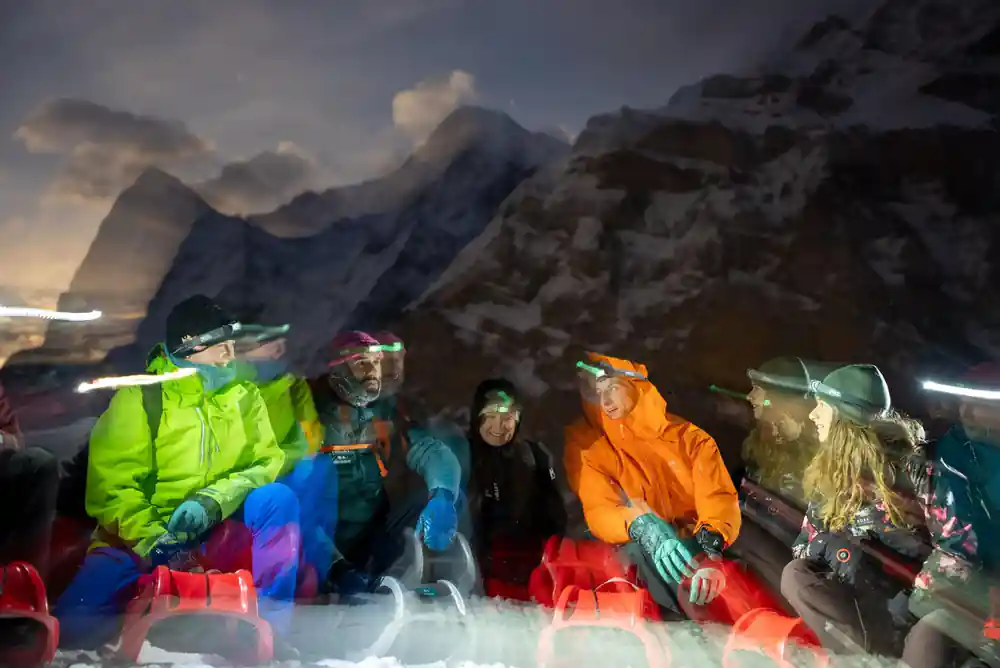
Warm winter clothing is explicitly excluded from the tour and explicitly available to rent on site: waterproof trousers, a jacket, gloves and hats. This is the single decision that most affects how much you enjoy the evening, and the pattern in traveller reports is unambiguous.
The reason is that a mountain at night in winter is a different proposition from a cold day in a city. You are stationary on a lift for part of it, then moving fast through the air, then sitting on snow, and the sequence finds every gap in improvised clothing. A wool coat is not waterproof, jeans hold water, and a scarf comes off at speed.
Renting also means you are not carrying ski kit around Europe for one evening. For most visitors passing through Interlaken, hiring at the meeting point is the obvious answer, and the shop exists precisely because the operator knows how this usually goes.
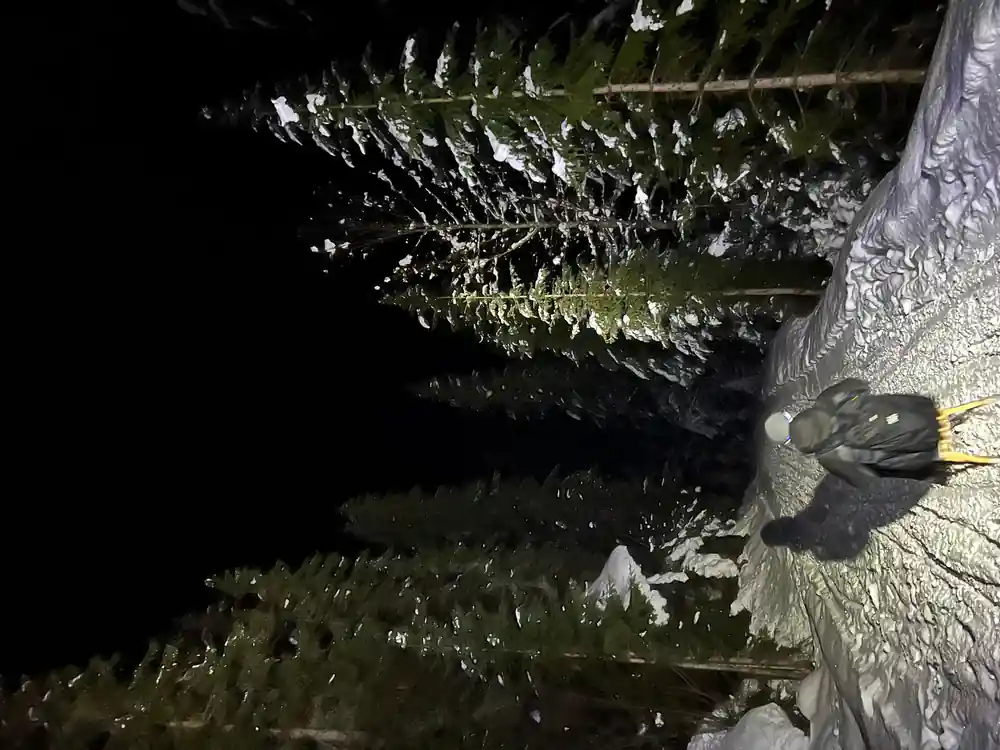
Waterproof trousers, real gloves and something over the neck: the short list
Layer by layer, if you are bringing your own
Start with a base layer that is not cotton, because cotton holds sweat and then chills you on the way down. Add an insulating middle layer you can remove at the top if the climb has warmed you. Finish with a windproof and waterproof outer, top and bottom, because both wind and snow are certainties rather than possibilities.
Trousers matter as much as the jacket and get less thought. You sit on snow, you may slide on it, and the seat of whatever you are wearing will be wet at some point. Ski trousers or proper waterproof over-trousers are the answer; jeans are the classic mistake and stay cold for the rest of the evening.
Socks should be warm and dry and there is no harm in a spare pair in a bag for afterwards. Feet get the worst of it because they are the brakes and they spend the descent in contact with snow.
The small items people forget
Gloves that you can actually grip in, and ideally a spare pair. You hold the sled, you steer with your hands, you put a hand down in the snow occasionally, and thin liner gloves are wet and useless within minutes. This is the item that appears most often in traveller accounts of what they would do differently.
Something over your neck and lower face. On the fast sections you are generating your own wind on top of whatever the mountain provides, and a buff or neck gaiter changes the experience considerably more than its size suggests.
A hat that stays on under any headgear you are given, and if you wear glasses, a cloth, because they will fog at the stops and clear on the move. None of these are expensive or bulky and all of them get mentioned afterwards.
5
Five things come with the tour: the sled, boots if you need them, transport from Interlaken, the gondola ticket and a guide for the descent.
What to leave behind
Anything you would mind landing in snow. Pockets empty themselves on a sled run, particularly on the sections where you are moving quickly and concentrating on the corner rather than on your jacket. Zipped pockets only, and preferably nothing loose at all.
Big bags are a nuisance because there is nowhere sensible to put them on a sledge and nobody wants to ride with one on their back. Take what fits in your pockets and leave the rest at your accommodation in Interlaken.
Phones deserve their own sentence. They come out at the stops and they go away for the descent, both because a bright screen resets your night vision and because a phone dropped in snow in the dark is very rarely recovered.
How cold it actually gets
Cold enough to matter and not cold enough to be alarming. You are at altitude, after sunset, in winter, which in the Bernese Oberland means temperatures below freezing on most nights the tour runs. The perceived temperature is lower again once you are moving.
The saving grace is that you are also generating heat: the gripping, steering and bracing add up, and most people are warmer on the way down than they were standing at the top waiting to start. The cold moments are the briefing and the stops, which is exactly when an extra layer earns its place.
The practical summary is short. Rent the trousers and jacket unless you own the real thing, bring gloves you can grip in, cover your neck, and treat everything else as a bonus.
Everything technical is provided, the clothing is up to you
from US$123Reserve now & pay later