









What the three hours actually contain
You meet in Interlaken and travel up into the mountains together. There is a gondola involved and its ticket is part of the tour, which matters because a mountain lift in Switzerland is not a trivial thing to add on afterwards. At the top there is a briefing, gear is sorted out, and then the group goes down as a group, with a guide in front setting the pace.
The whole thing is three hours door to door. Very little of that is standing around: the ride up takes a while, the briefing is short and deliberate, and the descent takes as long as it takes, with stops built into it. What you do not get is a queue, because a night run is not a busy place.
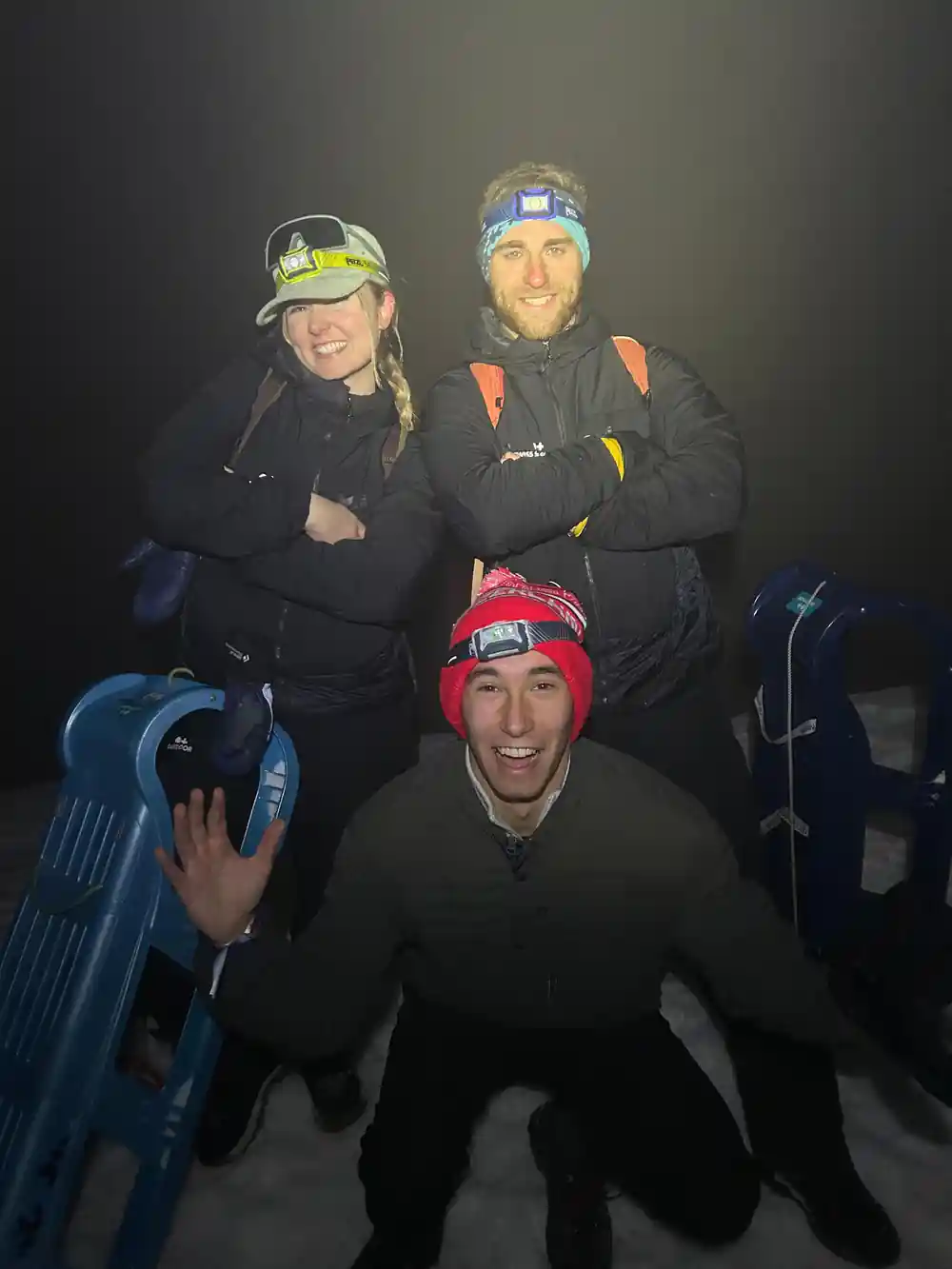
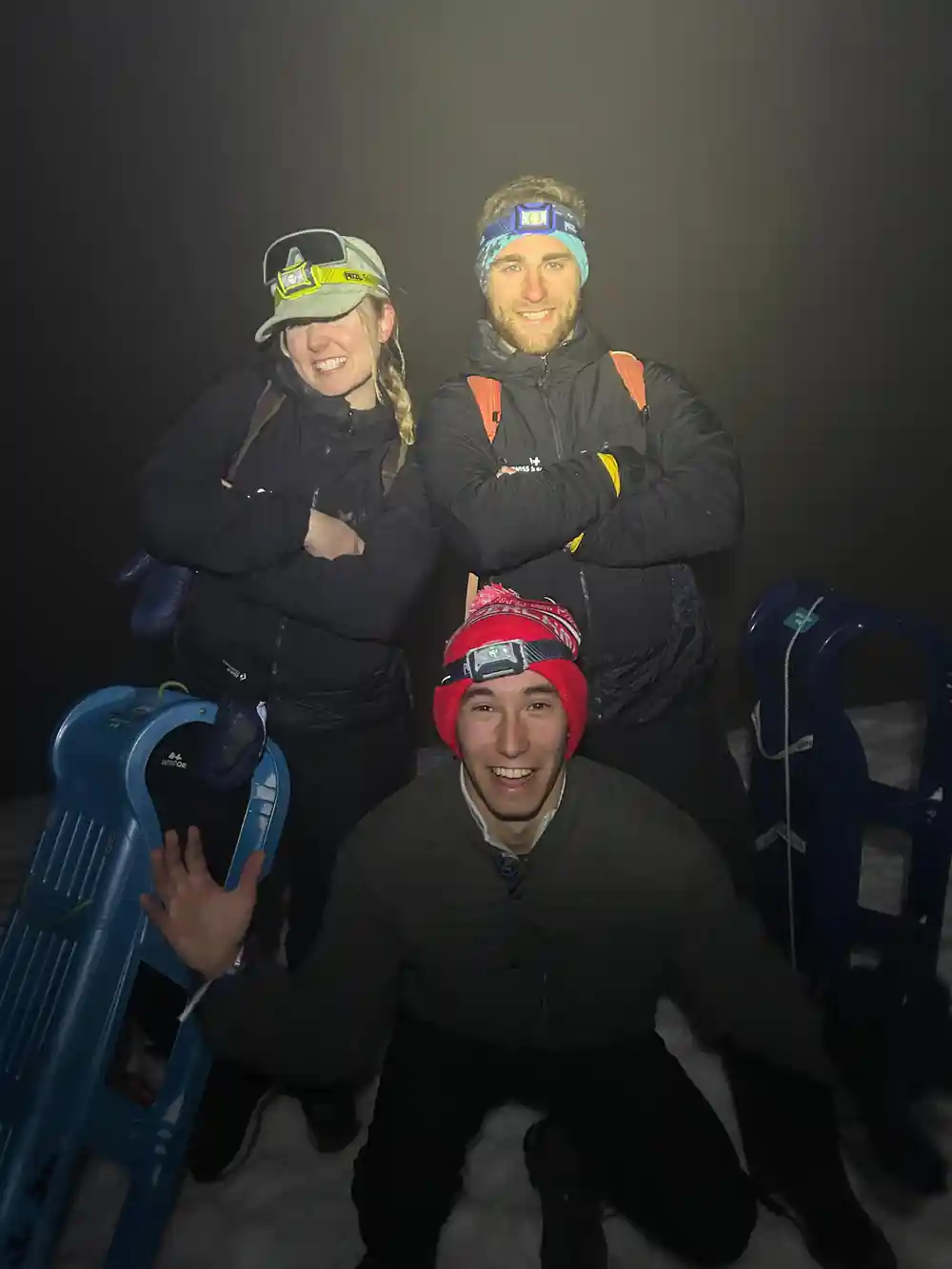
The sled is provided and so are hiking boots if you need them. What is not provided is warm clothing, which can be rented on the spot, and that turns out to be the single most consequential decision most people make about the evening.
Sledding in the dark, and why it works
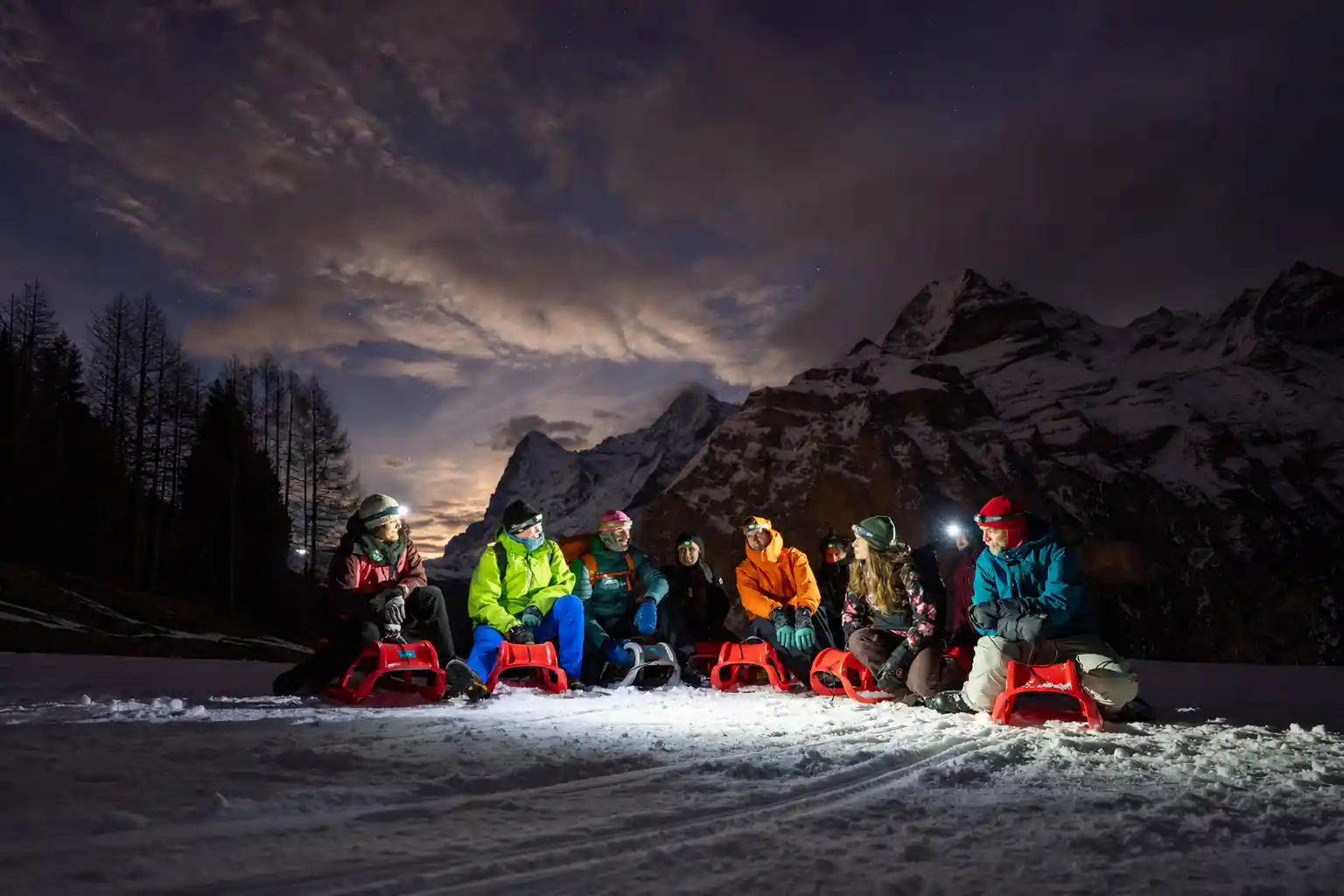
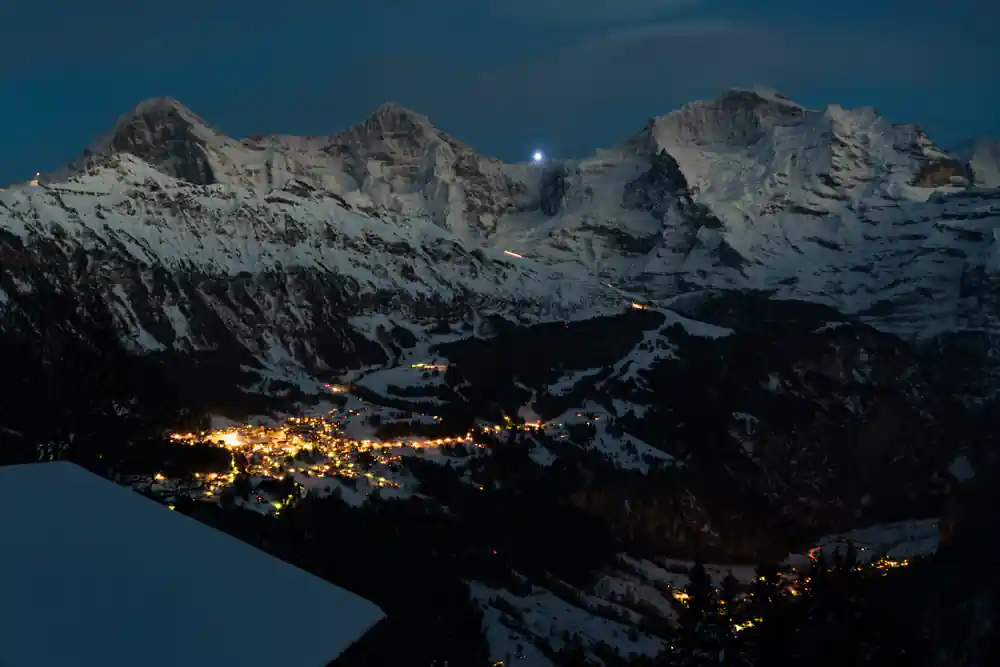
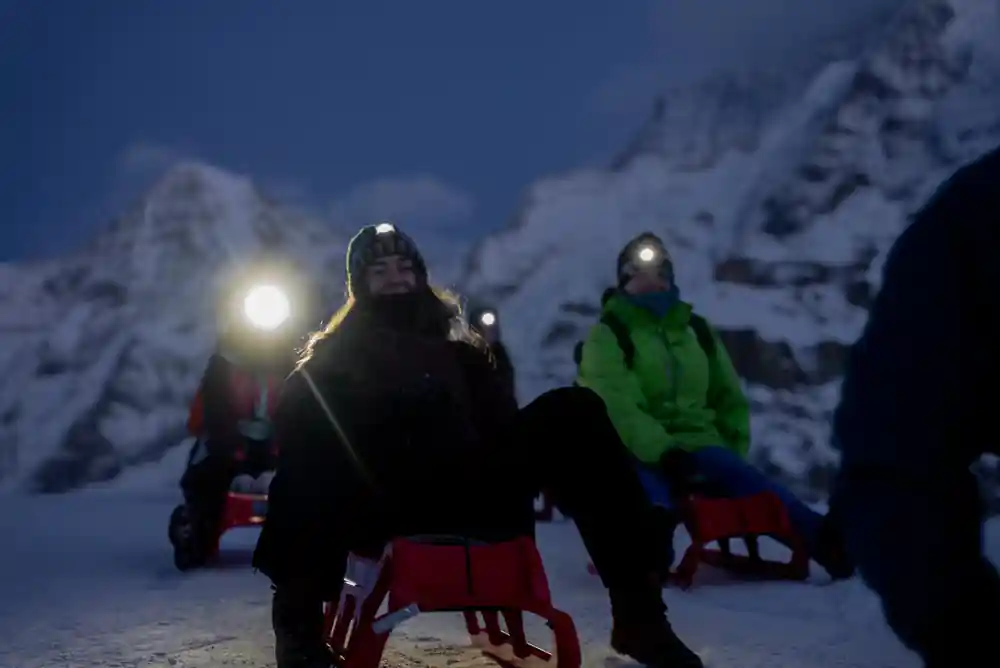
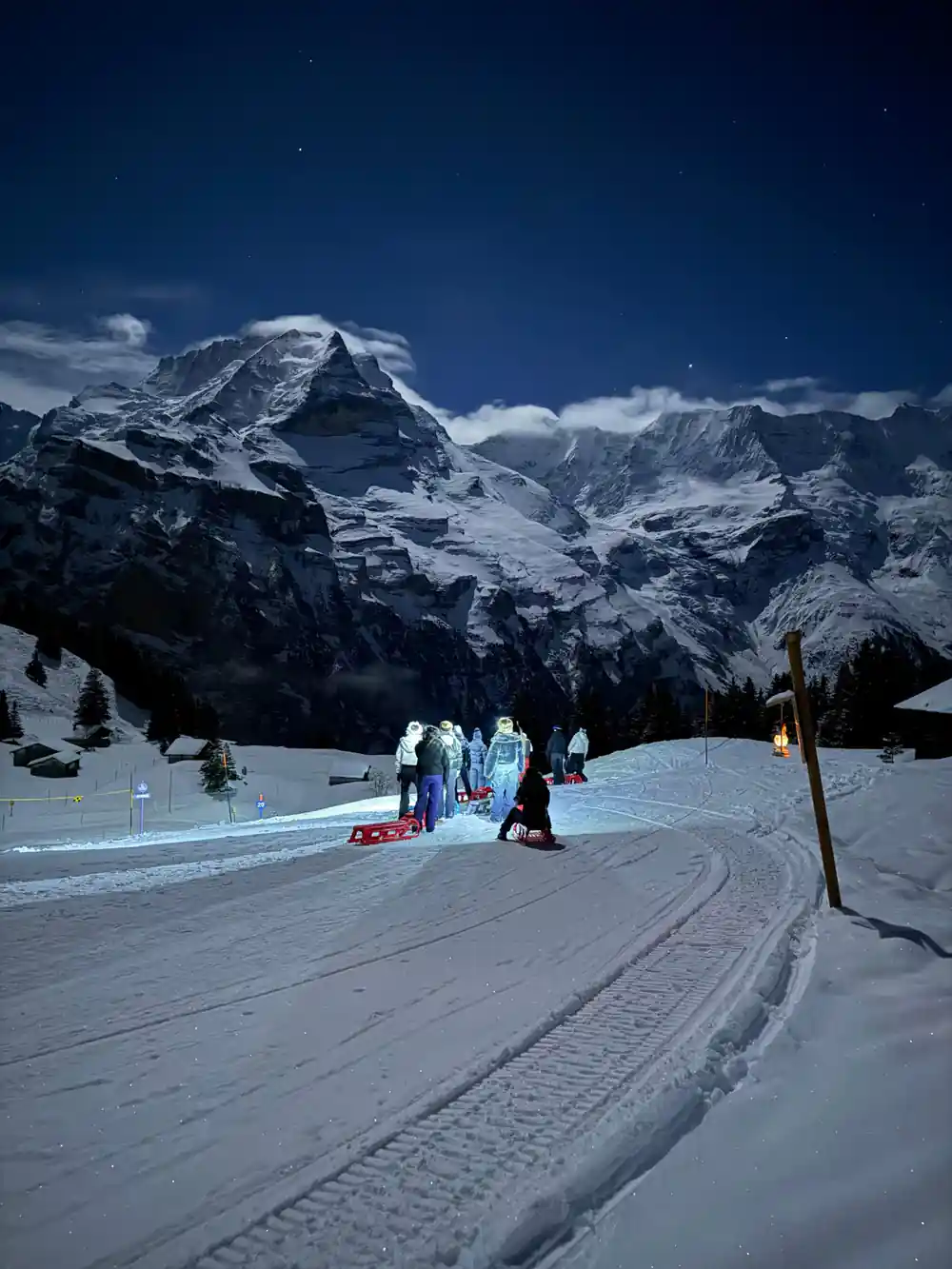
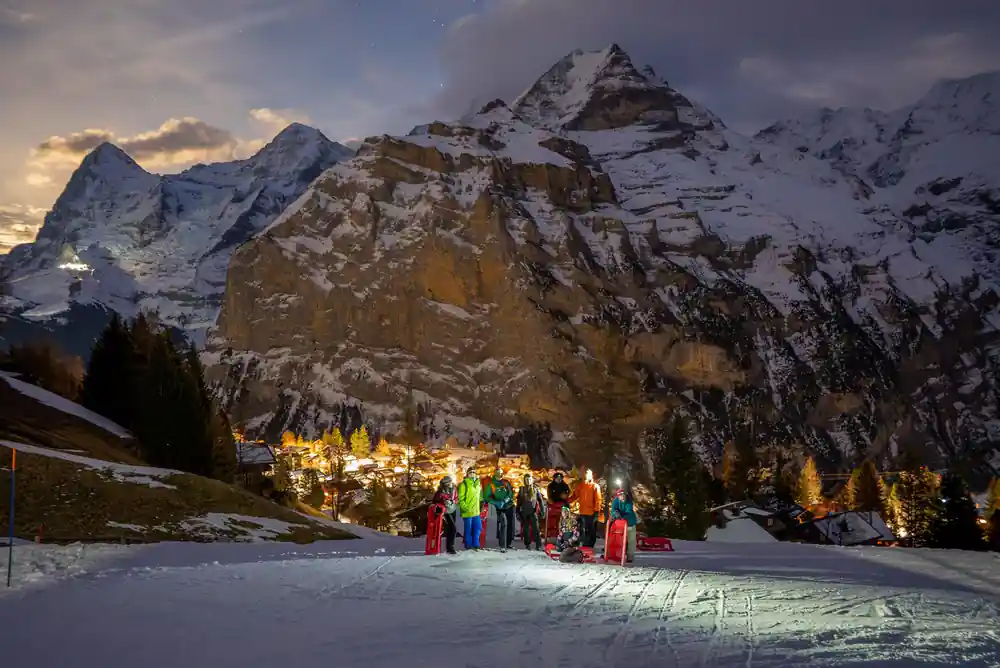
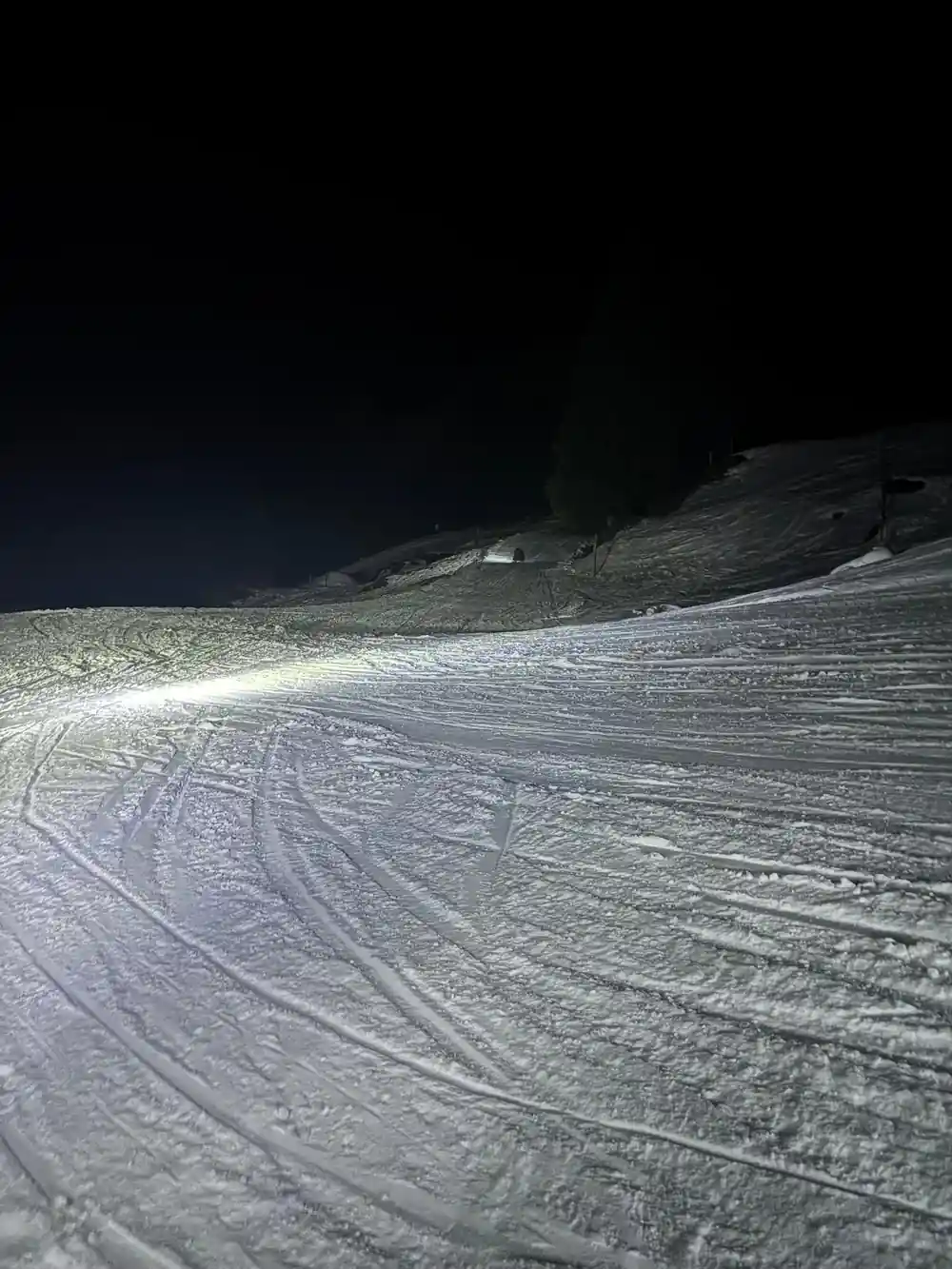
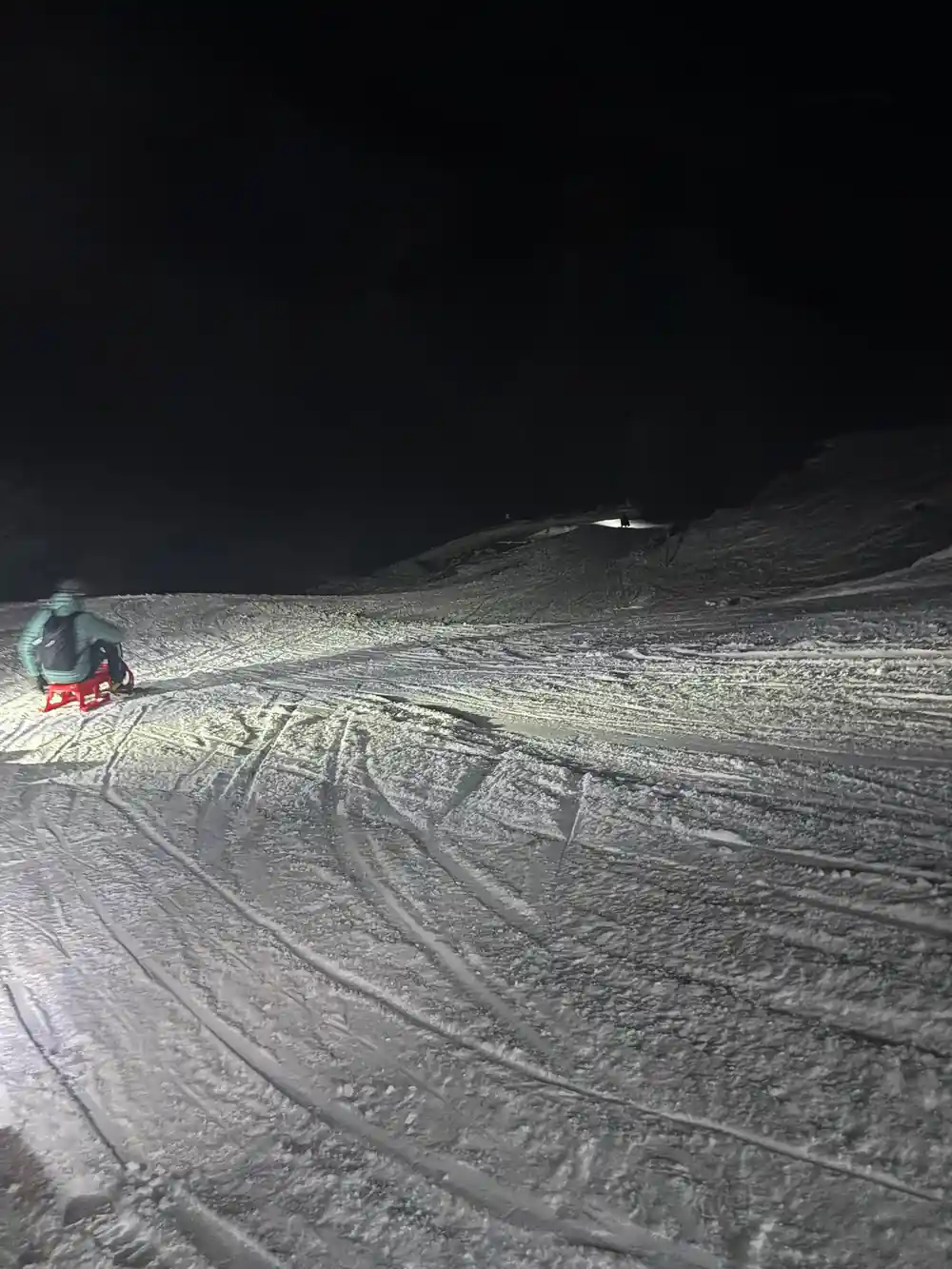
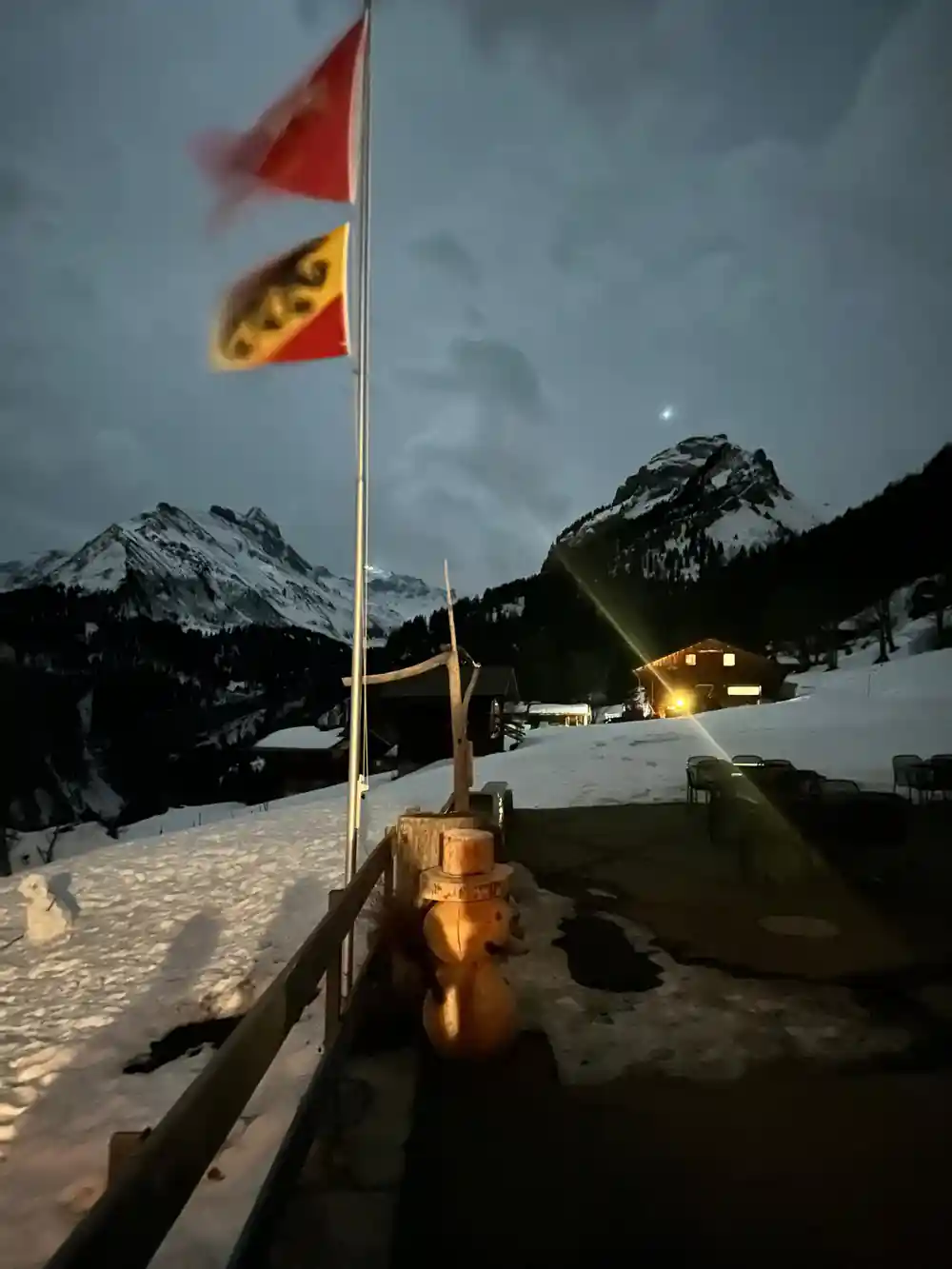
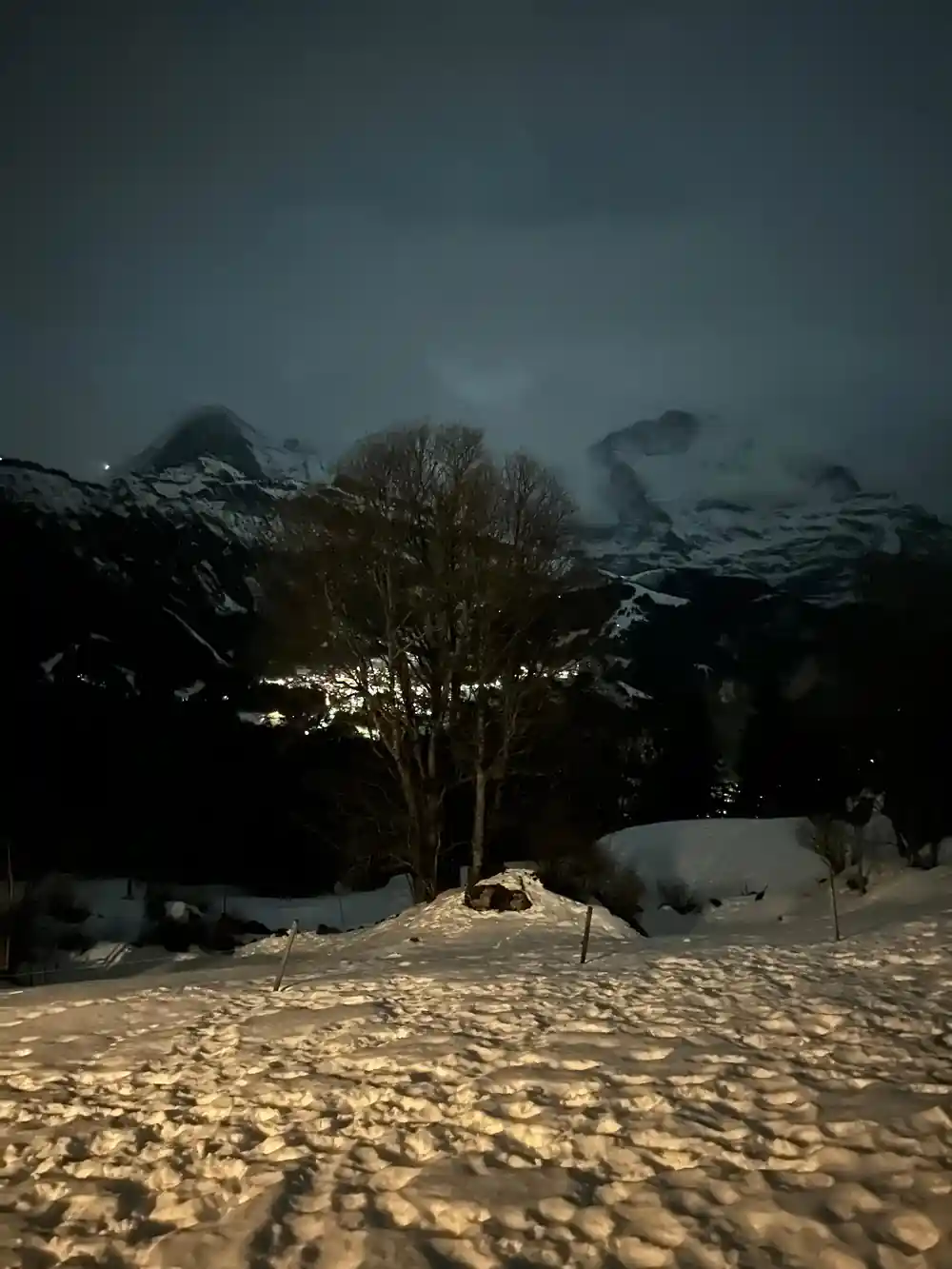
The obvious question is how you see anything, and the answer is snow. A snow-covered slope is close to the most reflective natural surface there is, so whatever light exists, from a moon, from stars, from the lights of the valley far below, comes back up at you rather than being swallowed. Ten minutes after the gondola doors close your eyes have adjusted and the track is perfectly legible.
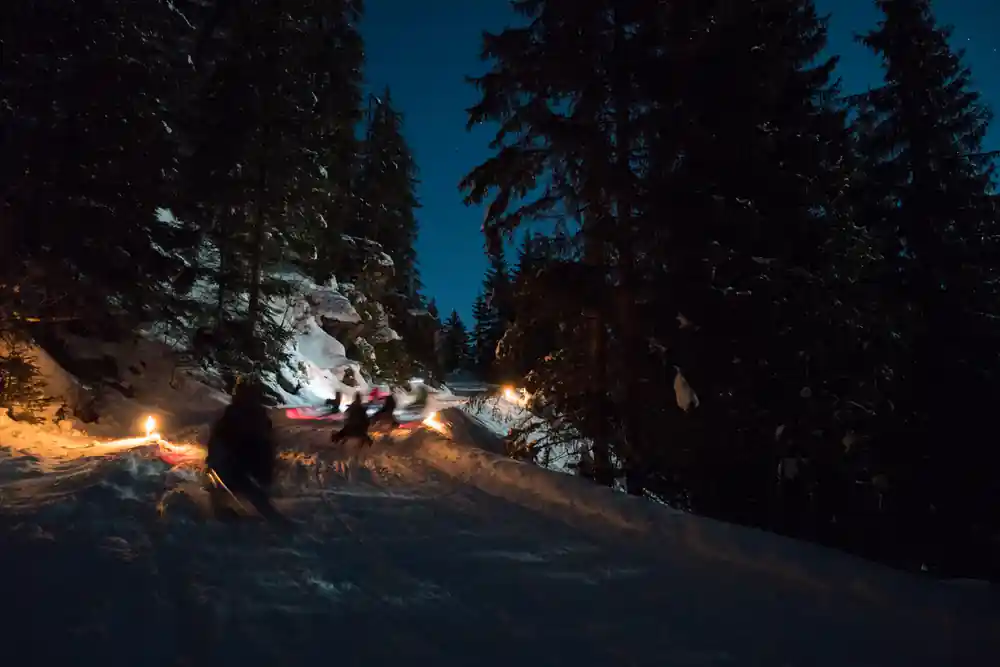
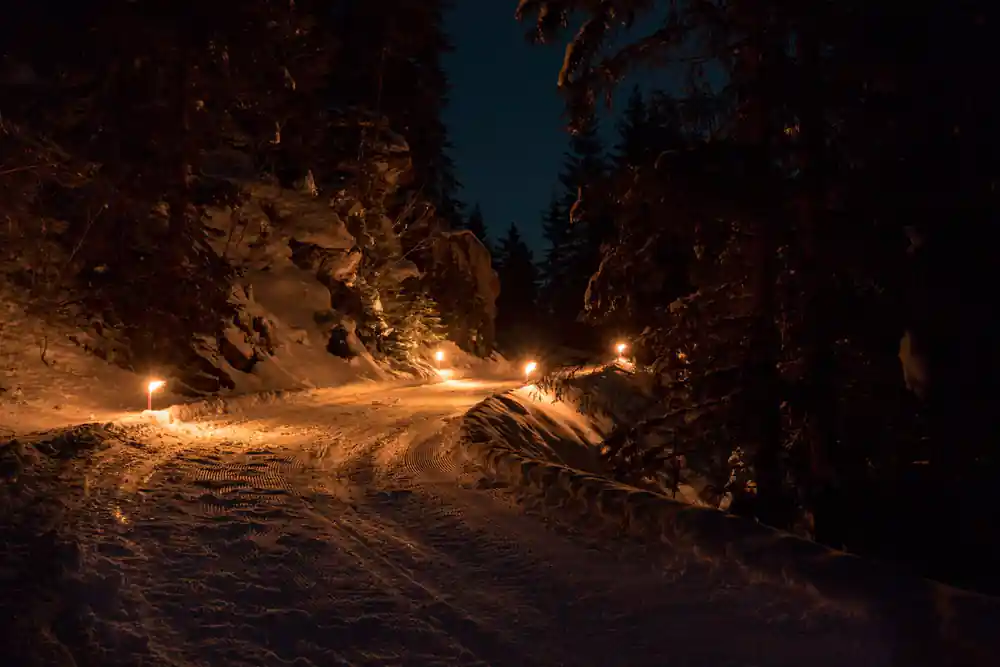
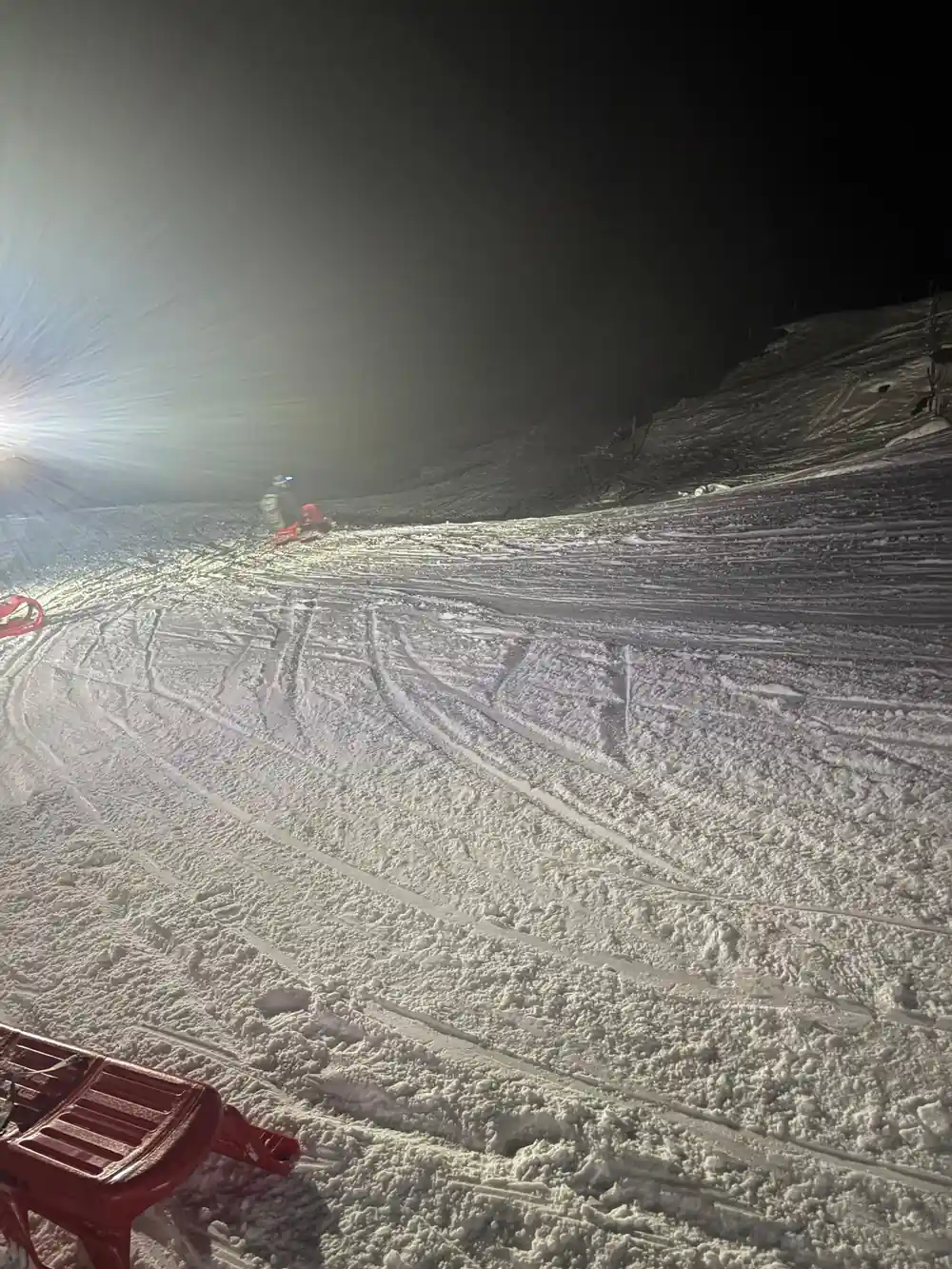
It is genuinely not floodlit, and that is deliberate rather than an omission. A lit run flattens everything into a strip of orange and kills the reason for going at night. What you get instead is a landscape in monochrome with a great deal of depth, and the specific pleasure of moving quickly through it.
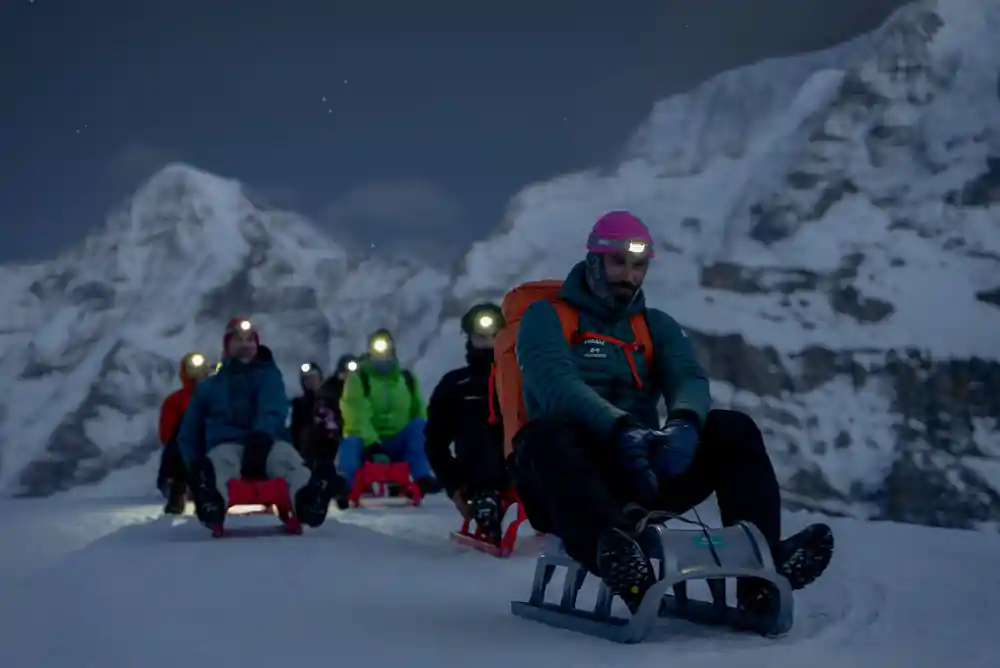
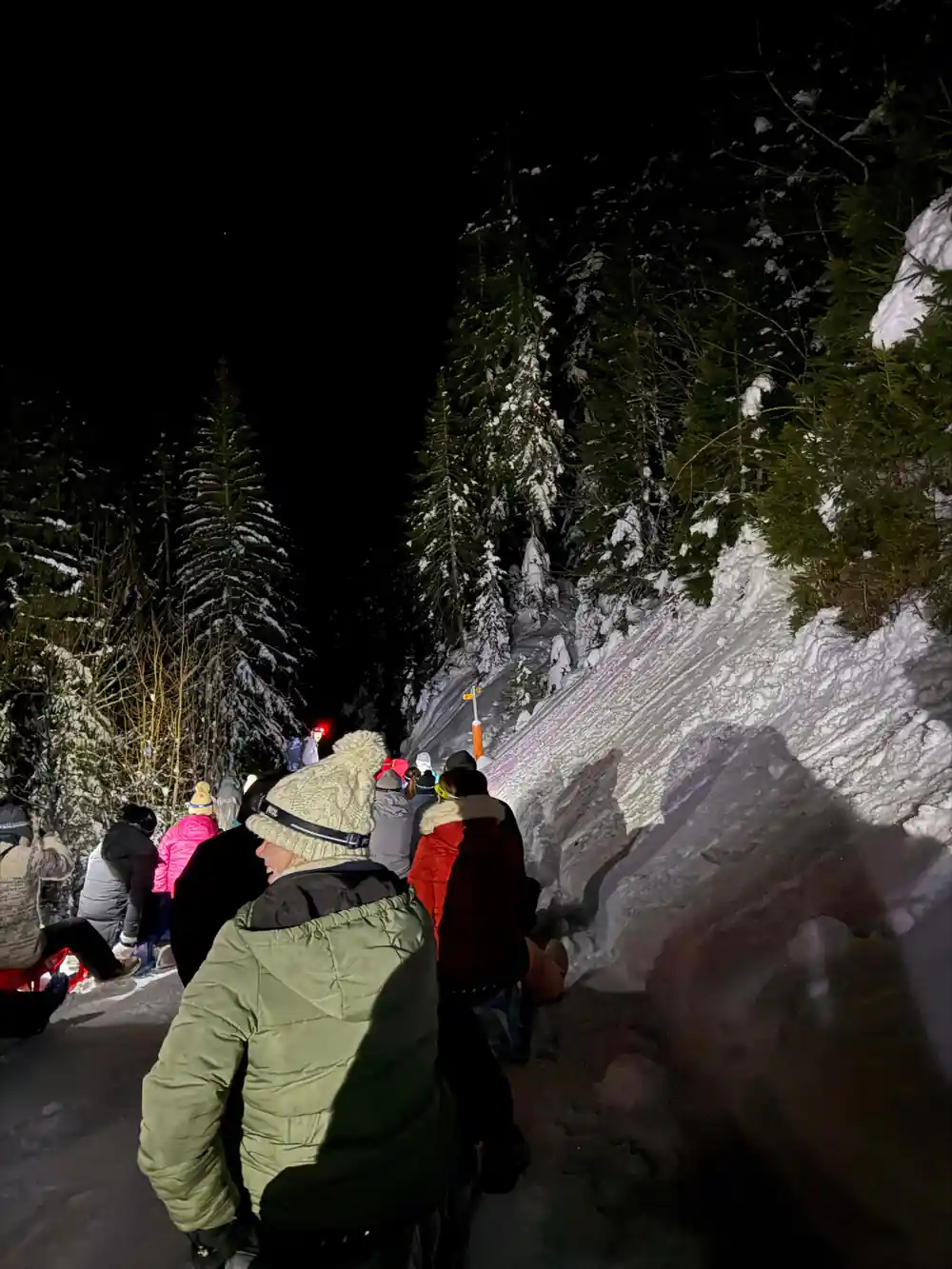
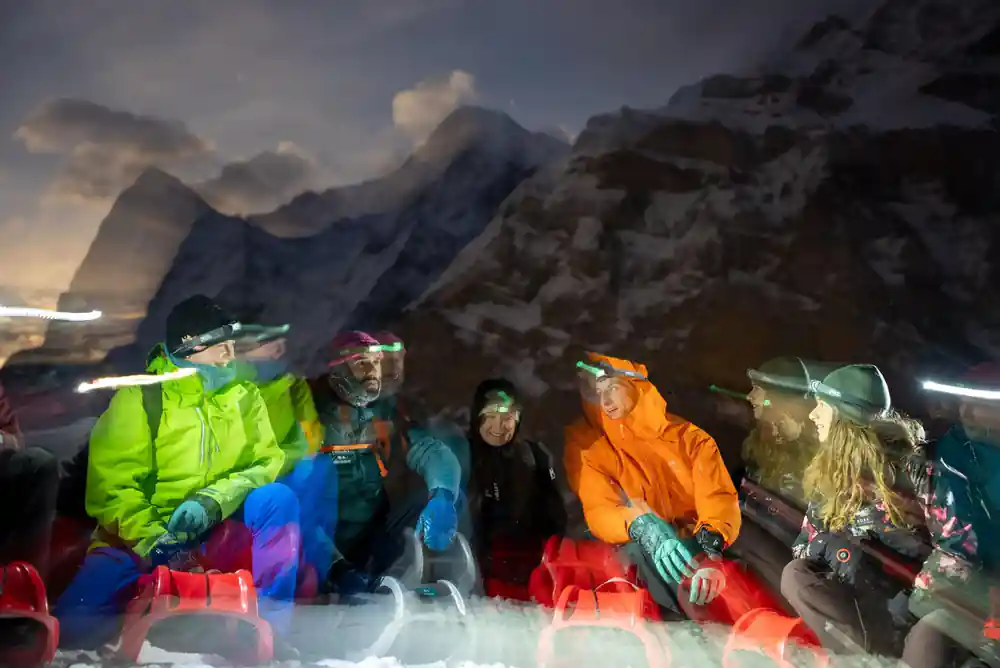
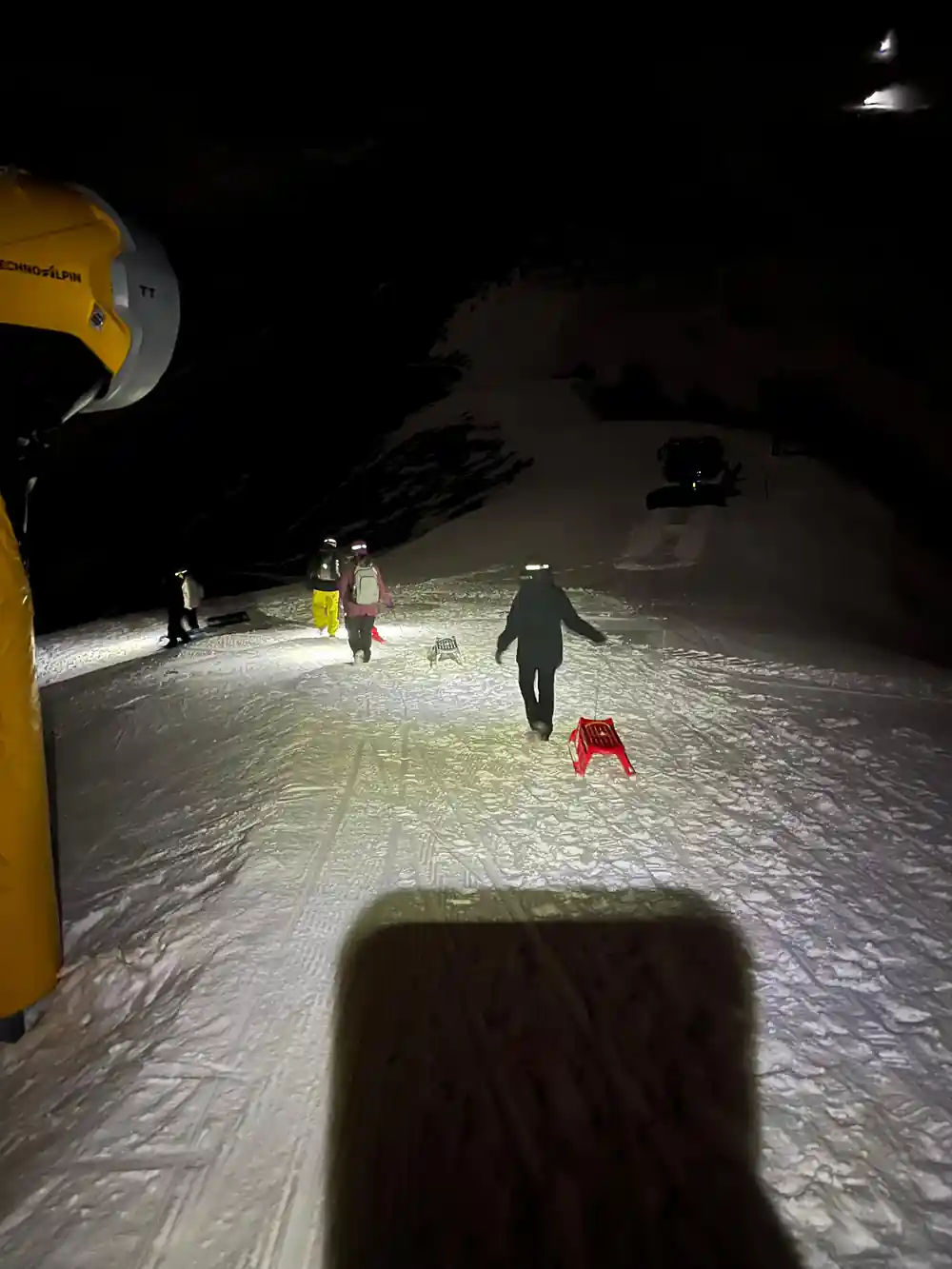
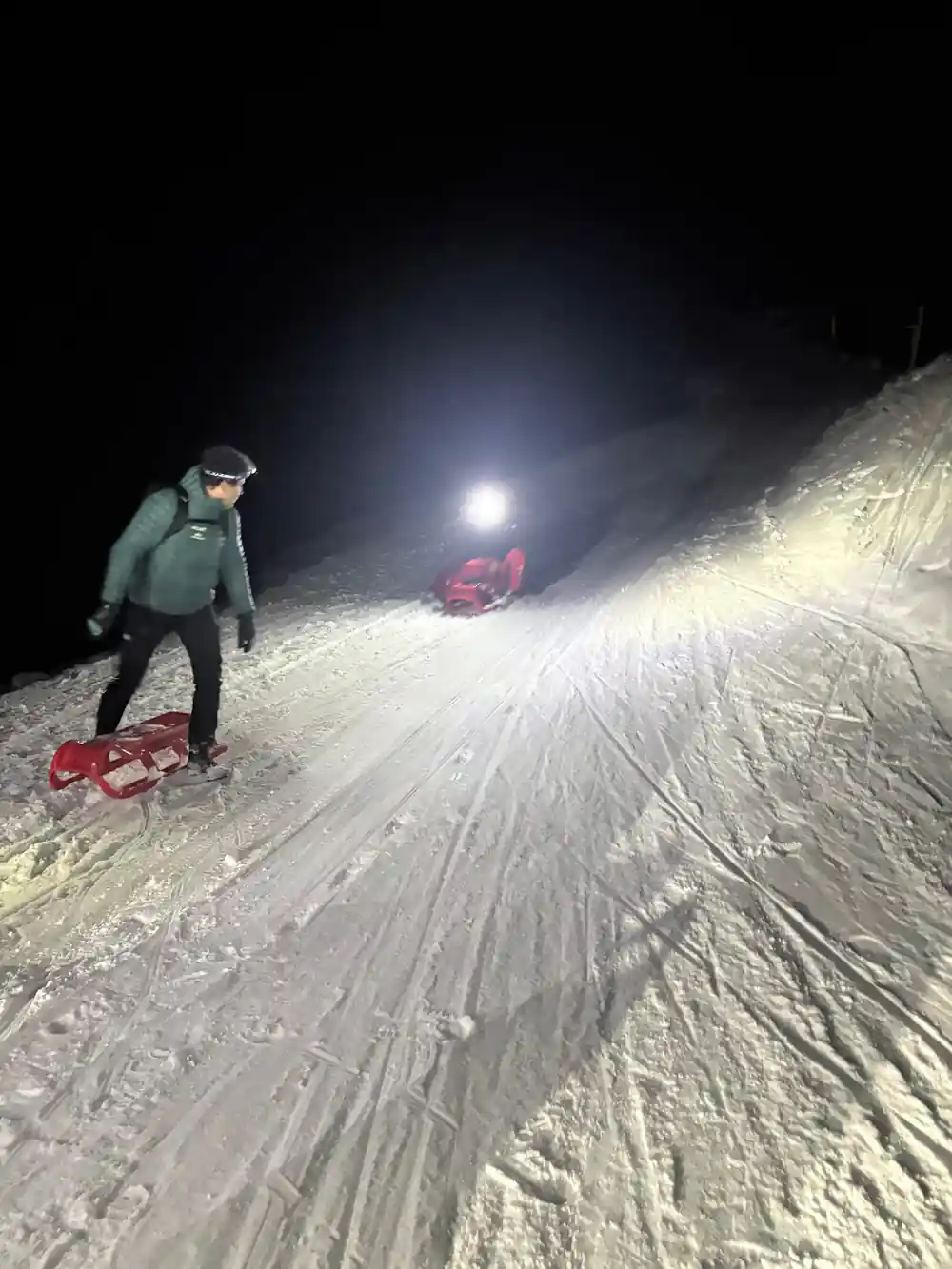
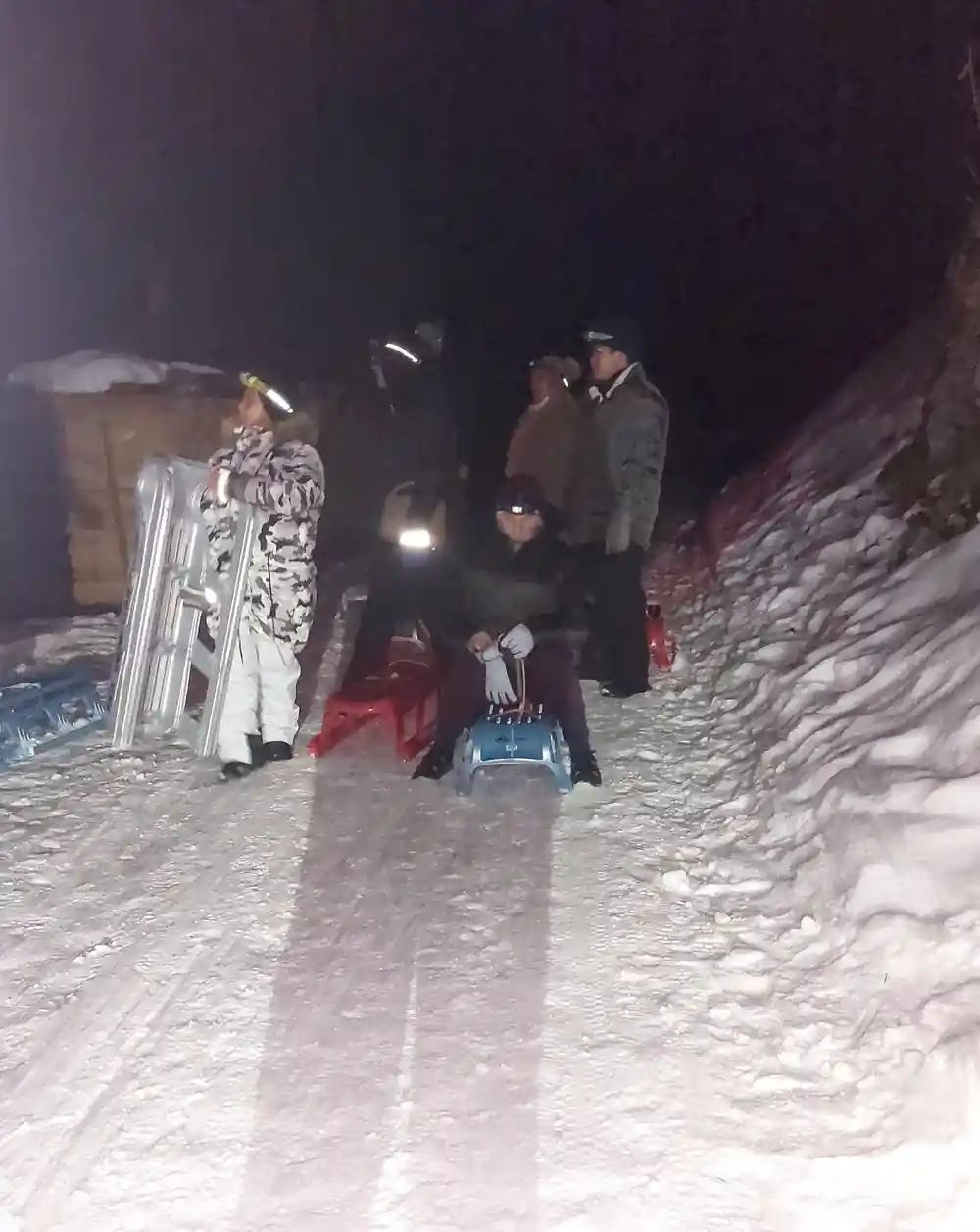
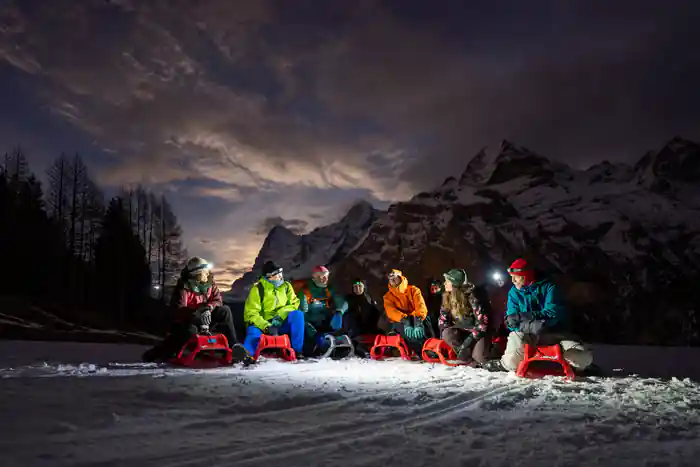
You are also not doing it alone. The guide goes first, the group follows in a line, and the person ahead of you is the most useful navigation aid on the mountain. Frequent stops let everyone regroup, which keeps the line together and gives you a chance to look at where you actually are.
How a sled handles, for anyone who has never done it
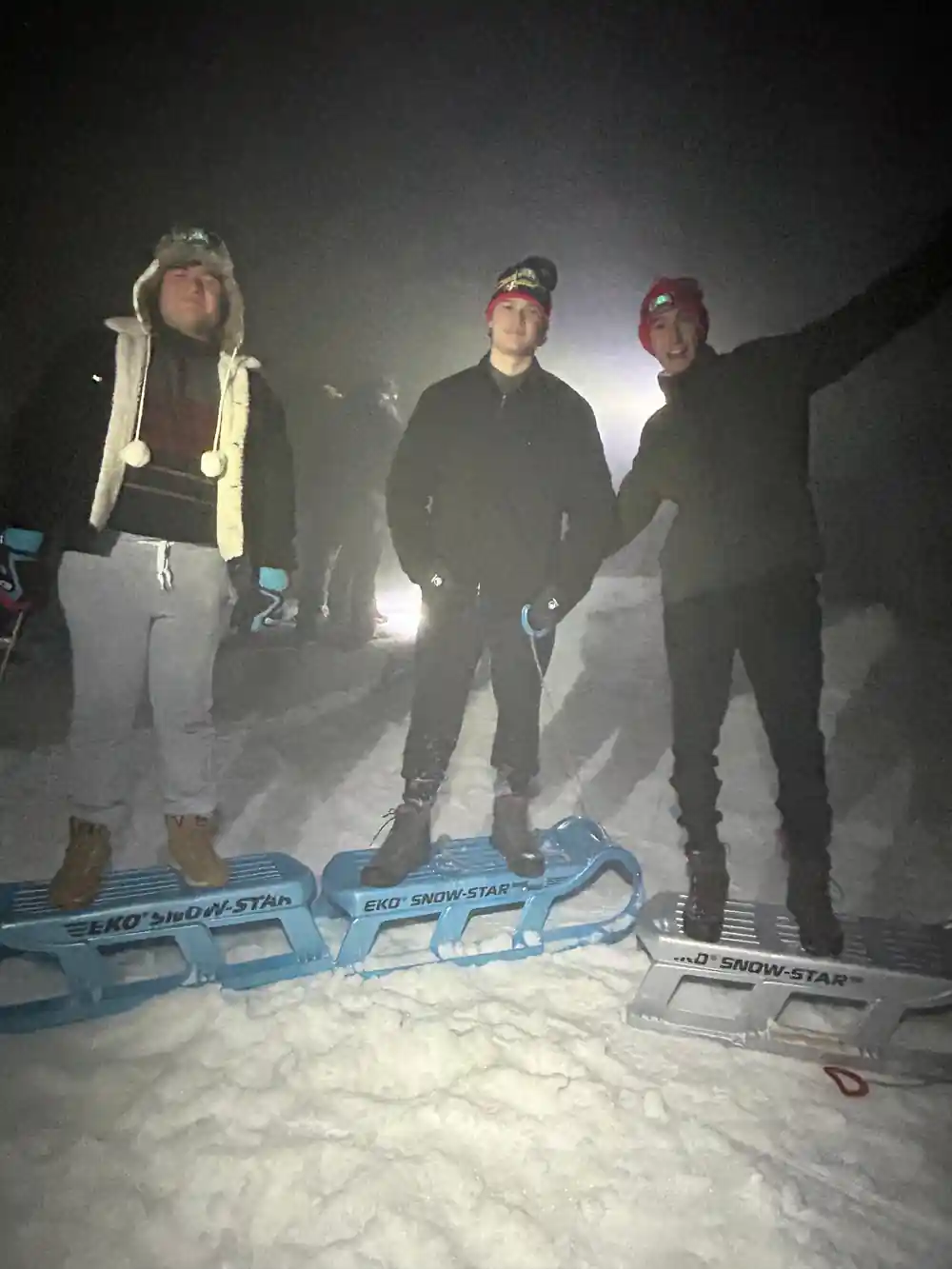
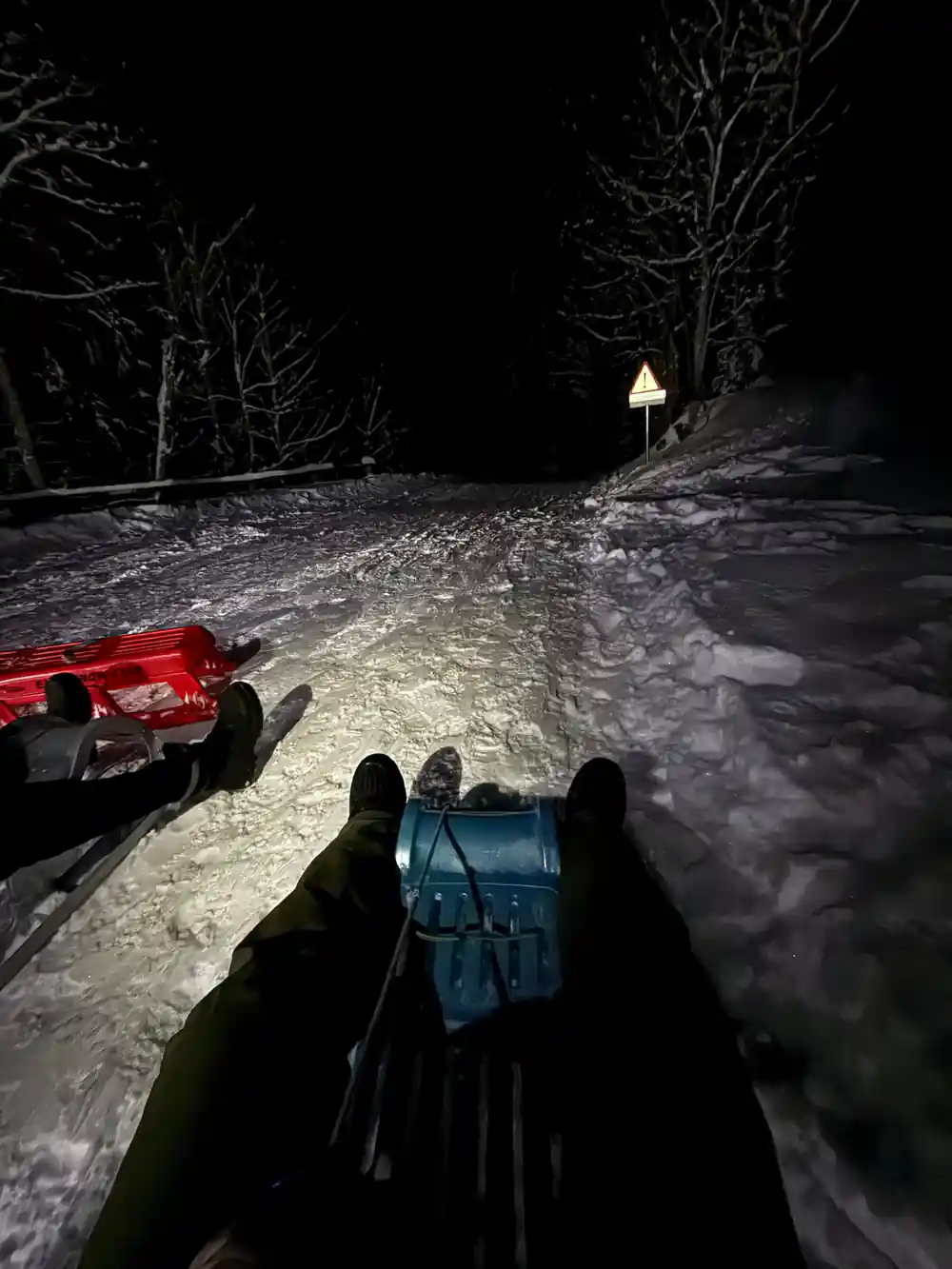
An alpine sledge is not a plastic tray. It is a wooden or metal frame on runners, you sit on it with your feet forward, and you steer by leaning and by putting a heel down on the side you want to turn towards. Braking is both heels, hard, and it works better than people expect once they commit to it.
The learning curve is one corner long. Almost everybody is tentative for the first thirty seconds and then spends the rest of the run choosing how fast they want to go, which is the honest description of the whole activity: it is not a skill sport, it is a nerve sport, and you set your own dial.
Speed on a good run is real. On the open sections you move quickly enough that the cold becomes a factor and quickly enough that steering matters, which is exactly why the briefing happens before rather than after.
Where it goes, and why that is not fixed
The tour does not commit to one run, and this is stated plainly in the tour's own conditions: the location may change depending on snow. That is not evasiveness, it is how winter works in the Bernese Oberland, where snow arrives at different altitudes at different times and a run that is perfect in January can be bare in early December.
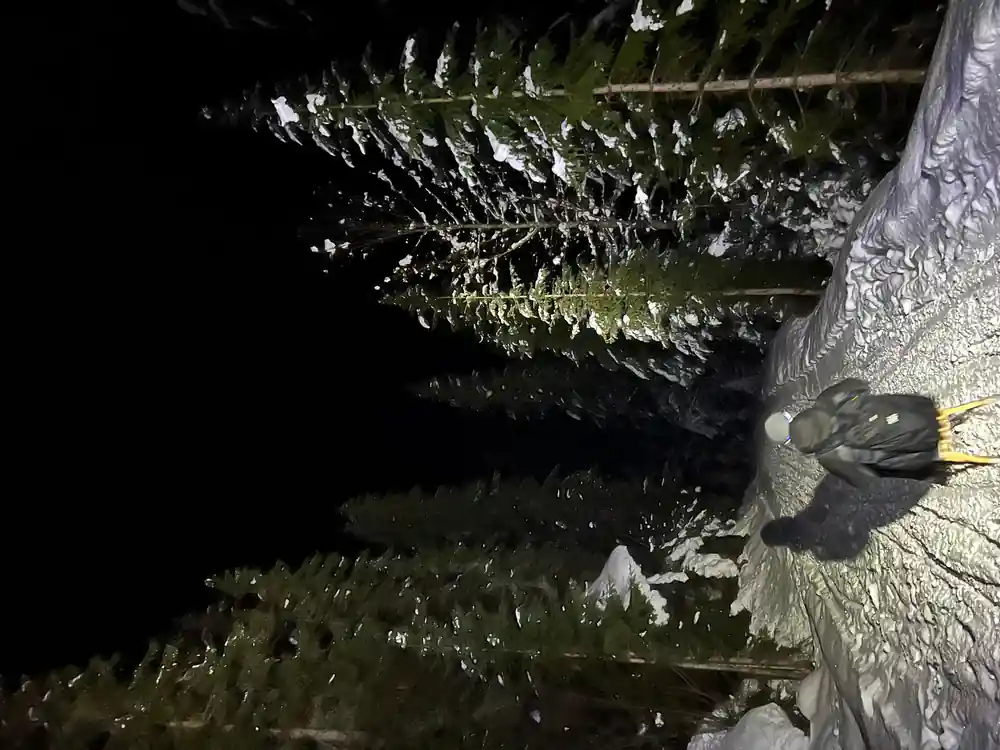
What is constant is the shape of the evening. You go up by lift, you come down a prepared sledging track, and the route passes through a mix of woodland and open alpine ground. The terrain varies from run to run in gradient and in length, not in kind.
The practical consequence is that you find out on the day, and that the operator is choosing the run with the best snow rather than the most convenient one. That is the right way round, even if it makes the booking page less specific than a visitor might like.
Who can do it, and who genuinely cannot
The restrictions on this tour are unusually specific and worth reading before booking rather than at the meeting point. There is a minimum age of ten. There is a weight limit of 125 kilograms. It is not suitable for pregnant women, or for anyone with back problems or heart problems.
Minors cannot come unaccompanied, and pets cannot come at all. None of these are box-ticking: a sledge on a dark mountain is a real vehicle carrying real speed, the descent is bumpy in a way that a bad back will notice, and the cold and exertion together are a genuine load on the heart.
Beyond that, no experience is needed and no particular fitness. The mountain is climbed by gondola, not on foot, and the descent asks for nerve and grip rather than technique.
What to wear, which is the decision that matters
Warm winter clothing is explicitly not included and is available to rent at the meeting point, and the reviews are consistent on this: the people who rented were warm and the people who improvised were not. You are outdoors, at altitude, after dark, moving fast through cold air, and a city coat is not the same category of object as ski trousers.
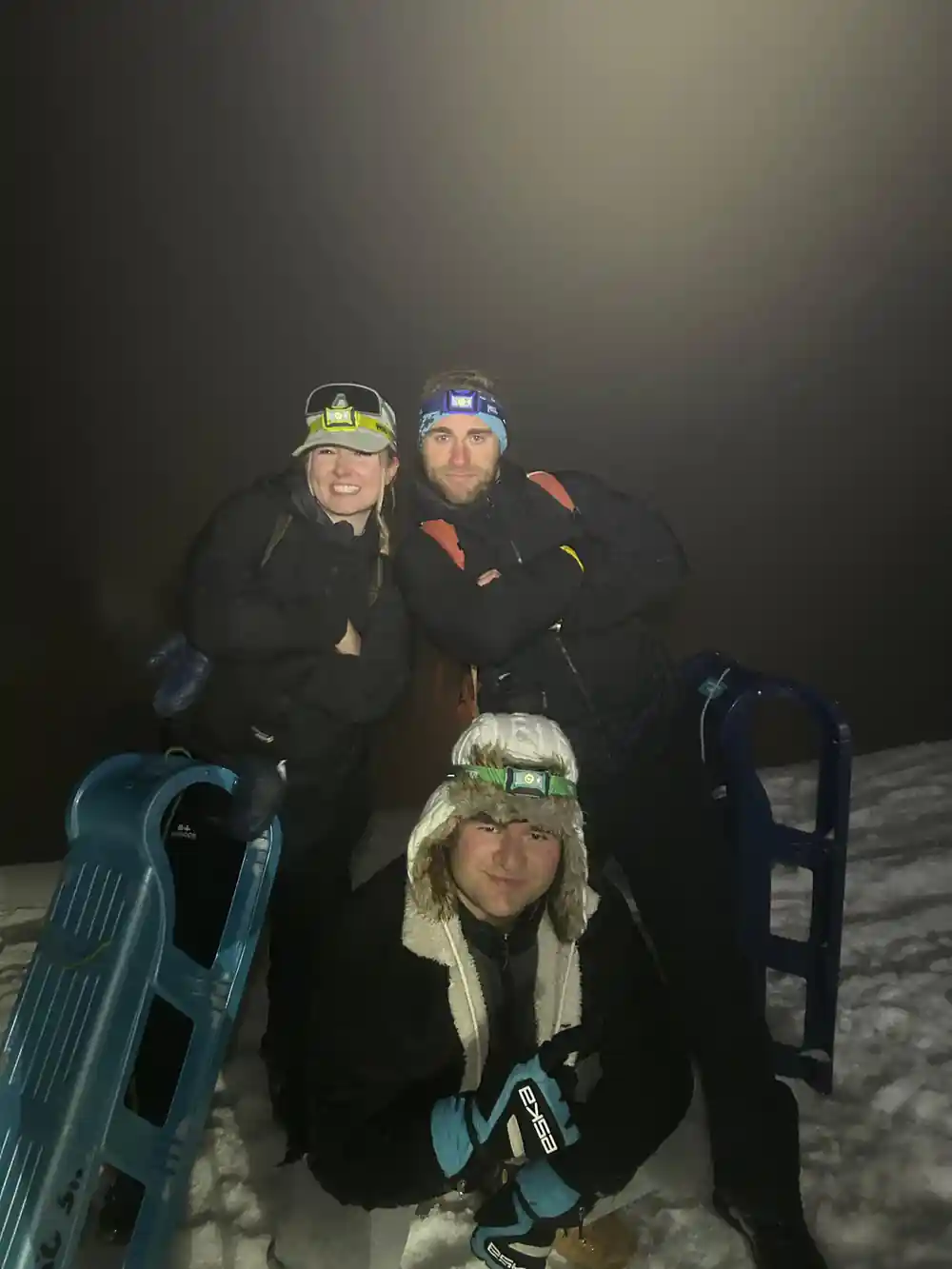
The items that matter most are the ones people forget. Gloves you can grip in, because you hold the sledge and use your hands. Something over your face or neck, because the wind is constant on the fast sections. Trousers you do not mind sitting on wet snow in, because you will.
Hiking boots are provided if you need them, which removes the most awkward item to pack. Bring a hat that stays on and warm socks, and treat everything else as layers you can add at the top.